Primary maths in England moves from counting and halves in Key Stage 1 to fractions with different denominators and the four formal written methods by the end of Year 6: column addition, column subtraction, long multiplication and long division. This page links every maths topic on Unlimited Sheets, each with self-marking practice, step-by-step explanations and printable worksheets with answer keys.
- 10 maths topics
- 41 PDF worksheets with answers
- Year 1 to Year 6
Maths topics
Column addition
Years 2–5
Carrying explained column by column, from 2-digit sums to numbers over 10,000, plus missing-digit puzzles.
Column subtraction
Years 2–5
Exchanging step by step, including subtracting across zeros, with answers that are never negative.
Times tables
Years 2–4
Interactive 12 × 12 square, practice by year group and a timed 25-question check for Year 4.
Long multiplication
Years 3–6
Short multiplication by one digit, then long multiplication with both rows of working shown.
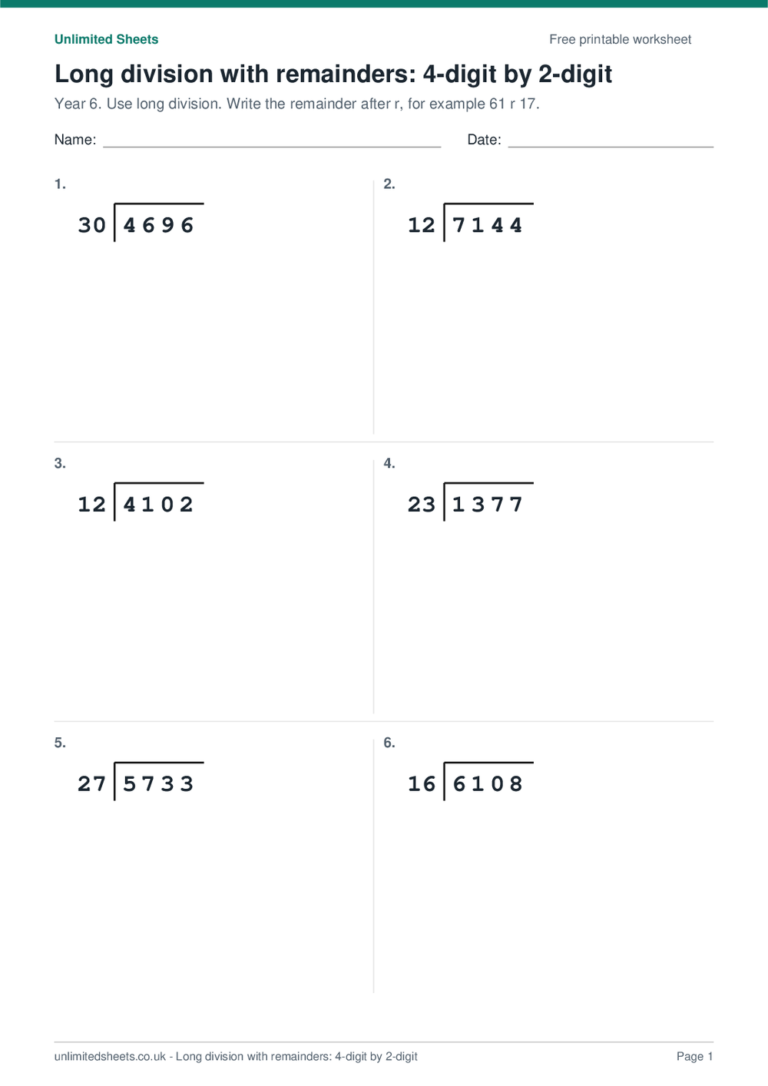
Long division
Years 5–6
A step-by-step calculator for any division, five practice levels and remainder word problems.
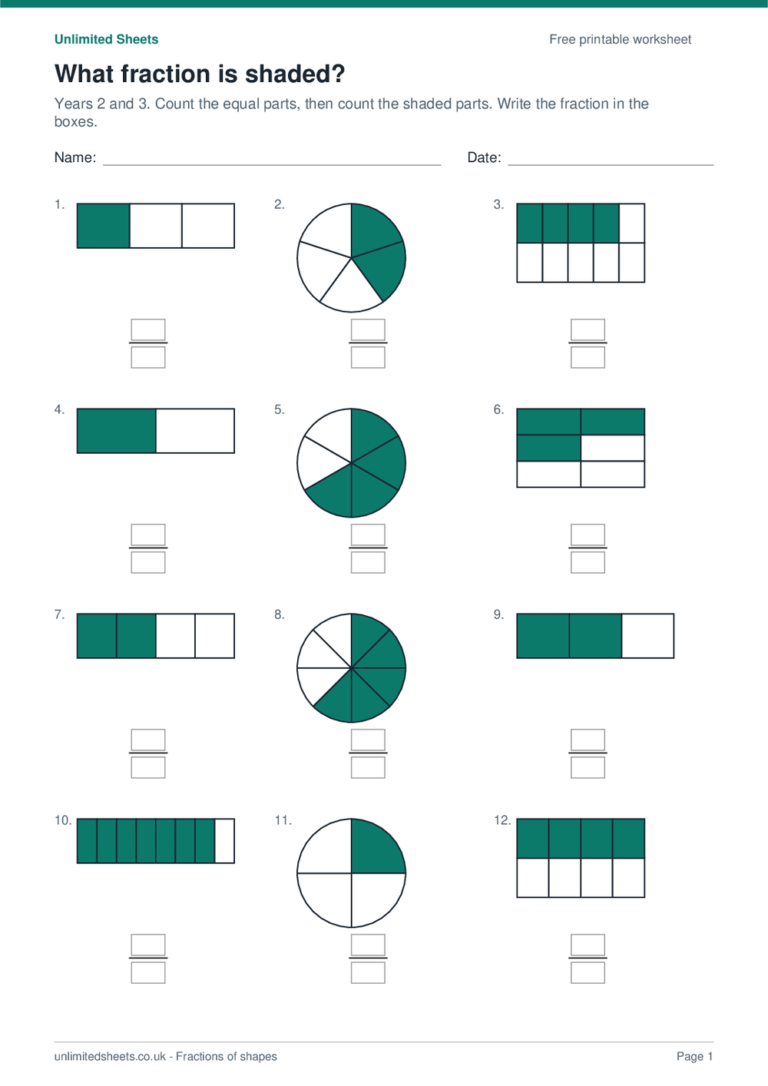
Fractions
Years 1–6
Fractions of shapes, equivalent fractions, comparing, mixed numbers and simplifying.
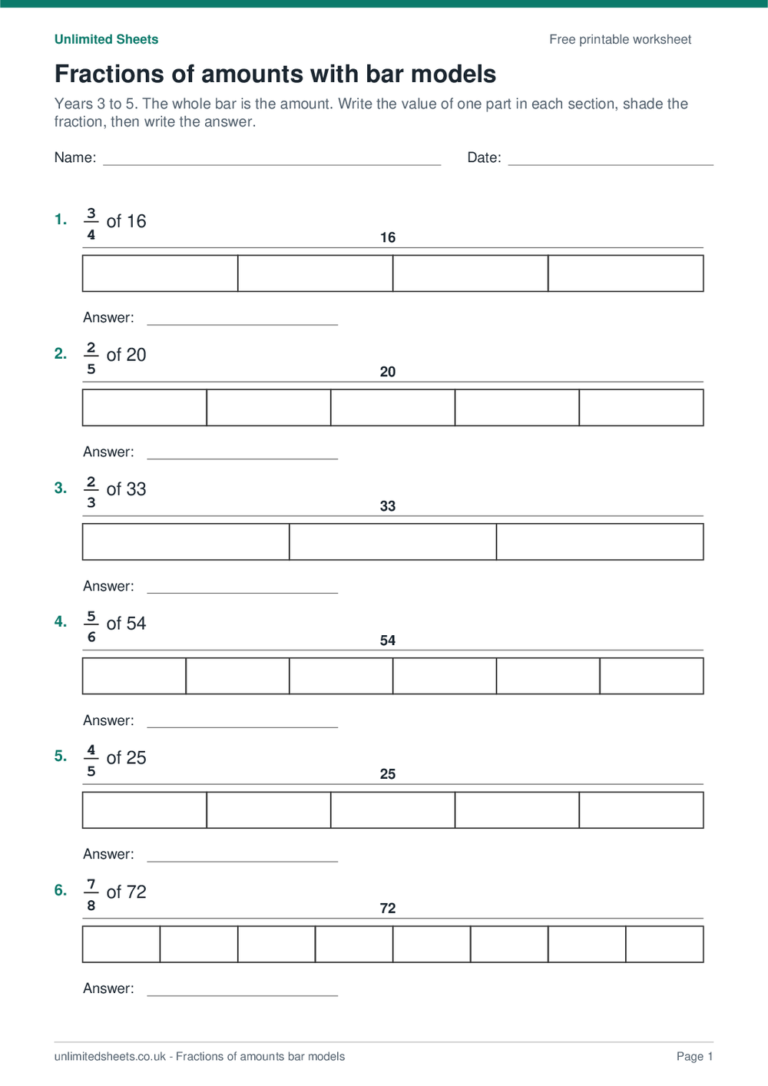
Fractions of amounts
Years 2–6
Divide by the denominator, multiply by the numerator, with bar models and word problems.
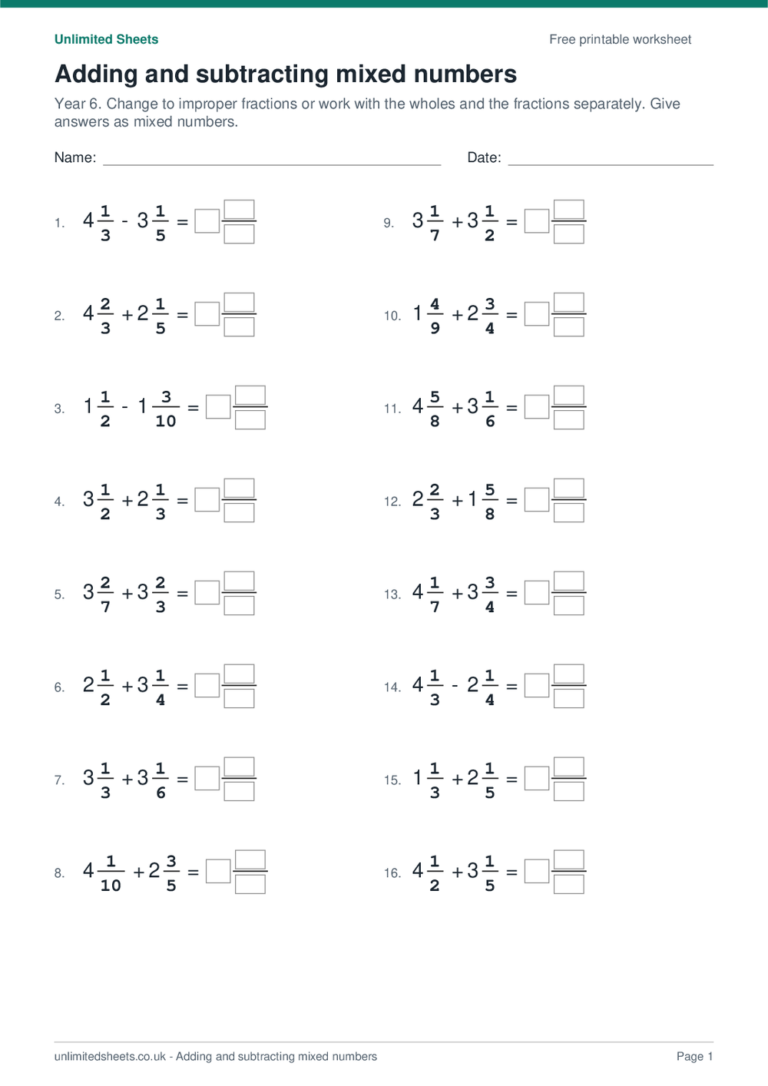
Adding and subtracting fractions
Years 3–6
Same, related and different denominators, then mixed numbers, always simplified.
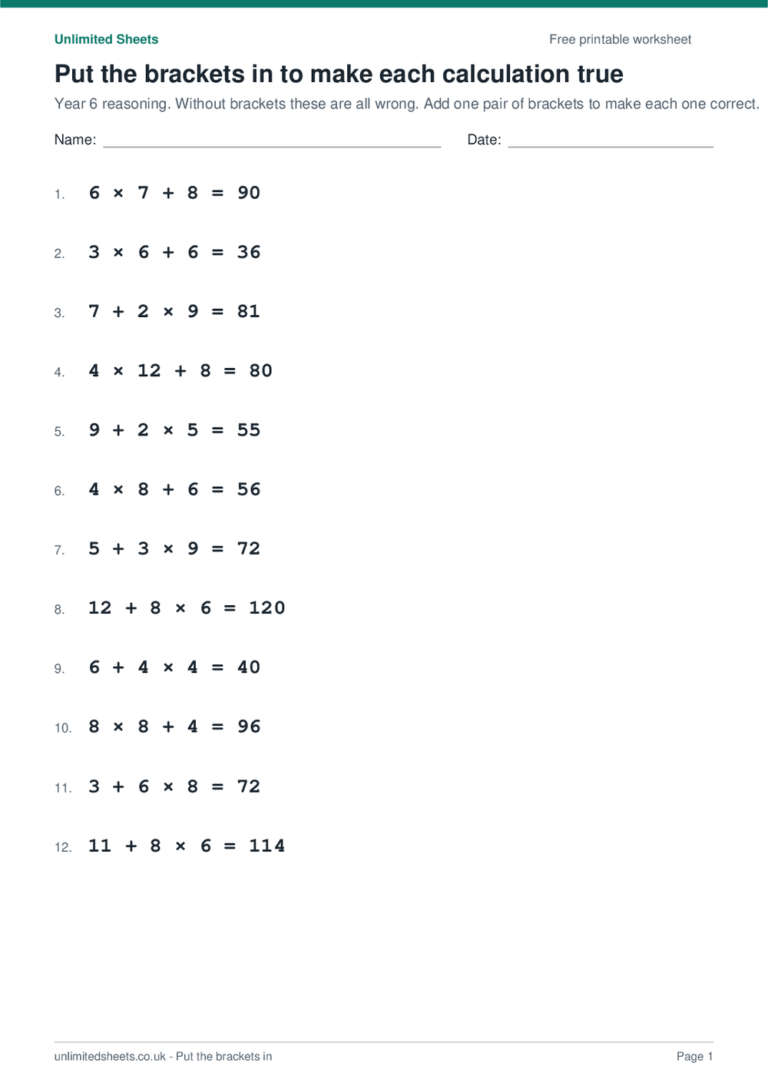
BIDMAS
Year 6
The order of operations with worked examples, four practice levels and a put-the-brackets-in challenge.
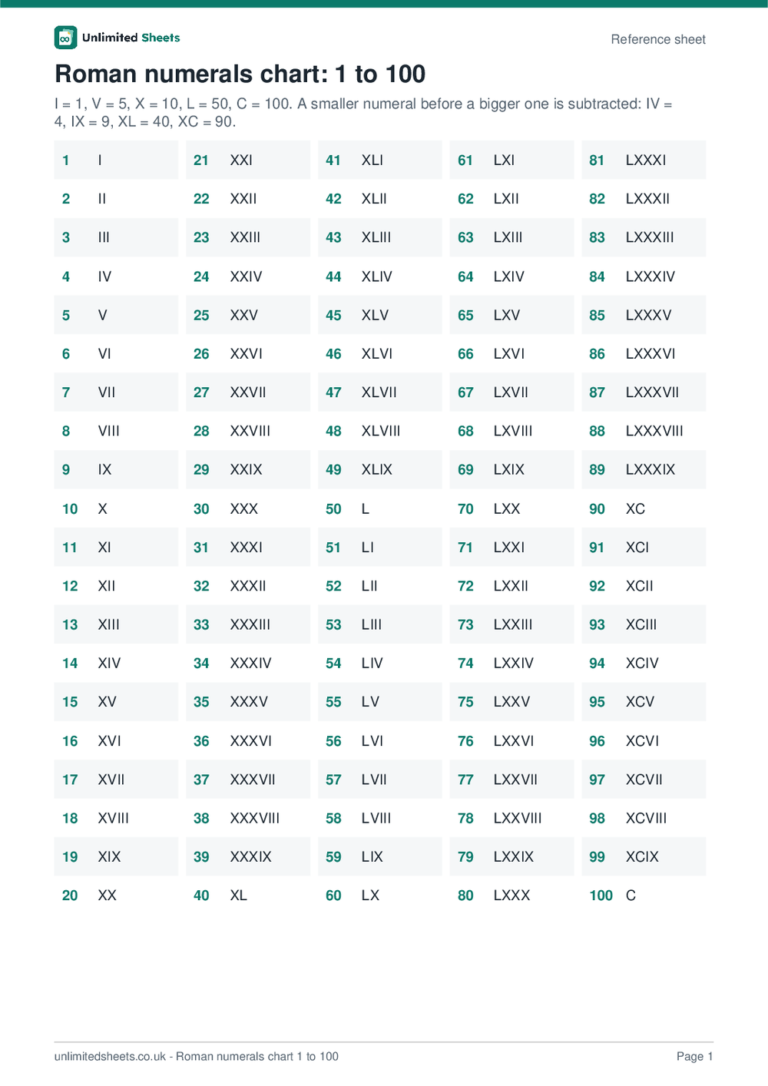
Roman numerals
Years 3–5
Converter, a 1 to 100 chart and practice from clock numerals to years in Roman numerals.
What is covered in each year
| Year | Topics on this site |
|---|---|
| Year 1 | Halves and quarters of shapes |
| Year 2 | Adding and subtracting 2-digit numbers; the 2, 5 and 10 times tables; thirds and quarters; fractions of small numbers |
| Year 3 | Column addition and subtraction to 3 digits; the 3, 4 and 8 times tables; 2-digit × 1-digit; adding fractions with the same denominator; Roman numerals I to XII on clocks |
| Year 4 | Column methods to 4 digits, including subtracting across zeros; all times tables to 12 × 12 and the multiplication tables check; equivalent fraction families; non-unit fractions of amounts; Roman numerals to 100 |
| Year 5 | Numbers with more than 4 digits; long multiplication by a 2-digit number; short division; mixed numbers and improper fractions; related denominators; Roman numerals to 1,000 |
| Year 6 | Long multiplication and long division; simplifying fractions and adding with different denominators; order of operations |
The four written methods, in the order they are taught
Each method depends on the one before. Column addition comes first, because subtraction is checked by adding. Multiplication needs the times tables, and long division needs all three: at every step a child divides, multiplies and subtracts. If long division is going wrong, the cause is very often slow times tables or a subtraction slip, so it is worth going back a step. Fractions lean on the same facts: finding equivalent fractions and common denominators is times tables in disguise.
All maths worksheets
Every worksheet is A4, generated from the same rules as the practice exercises, with the answer key on page 2.
Questions about the maths worksheets
Are the worksheets free to print for a whole class?
Yes. You can print and photocopy them for your own children, your class or your tutoring. Please link to the page rather than uploading the files elsewhere.
Do the worksheets follow the National Curriculum?
Yes. Each topic page lists the statutory requirement it practises, quoted from the Department for Education programmes of study, and the number ranges match each year group.
Which topics are coming next?
Place value and rounding, telling the time, measures and decimals are the next maths topics, followed by year-group pages for English.
Updated 22 November 2026.