
A digraph is two letters that make one sound, such as sh in ship. A trigraph is three letters that make one sound, such as igh in night. A split digraph is two letters that make one sound with another letter between them, such as a-e in make.
Digraphs
| Type | Examples |
|---|---|
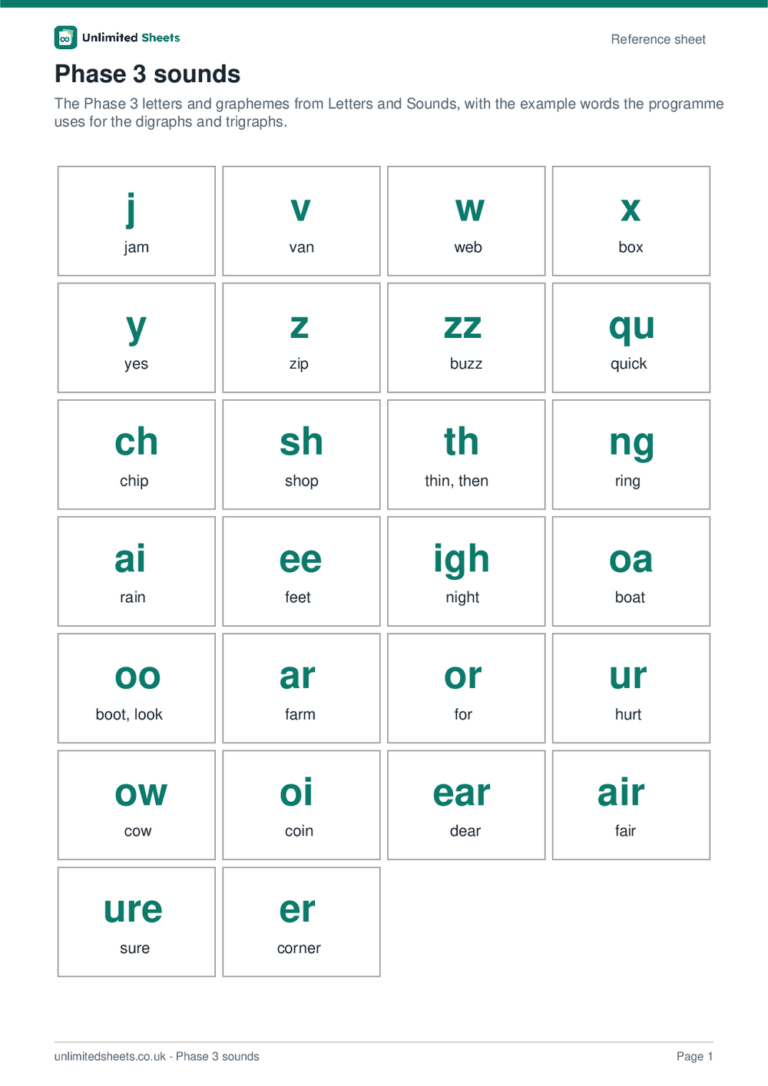
| Consonant digraphs | ch (chip), sh (ship), th (thin), ng (ring), ck (duck), wh (when), ph (photo) |
| Double letters | ff (off), ll (bell), ss (kiss), zz (buzz) |
| Vowel digraphs | ai (rain), ee (feet), oa (boat), oo (moon, book), ar (farm), or (fork), ur (hurt), ow (cow), oi (coin), er (hammer) |
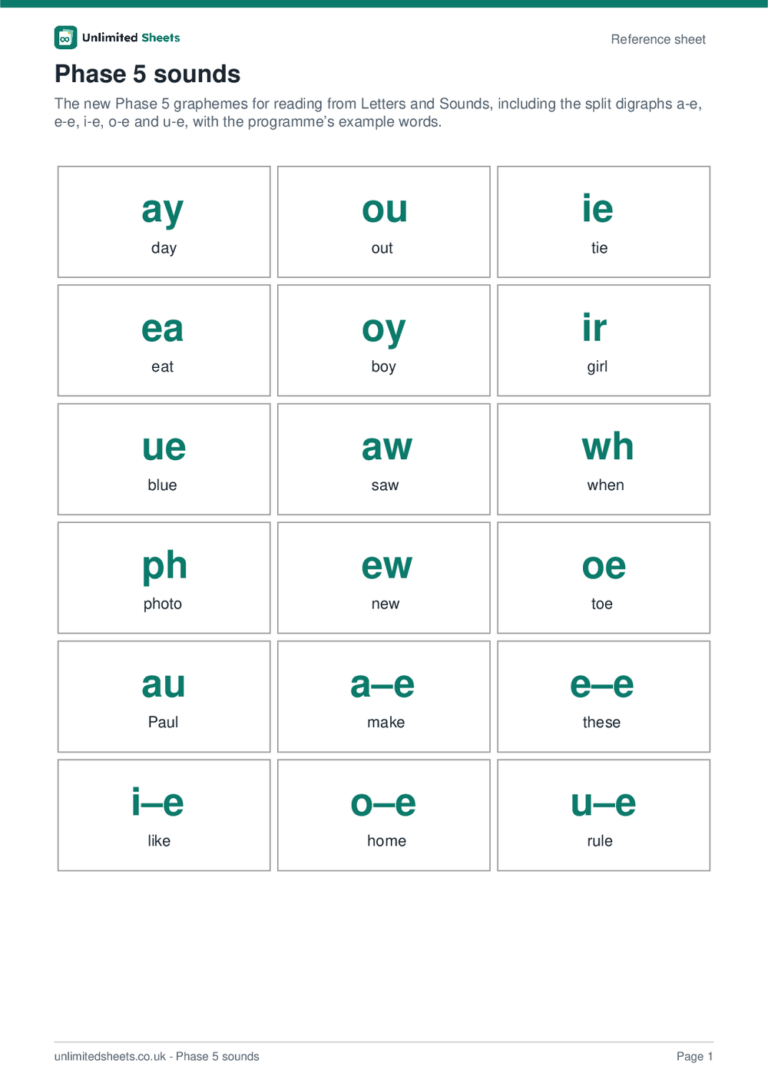
| Phase 5 vowel digraphs | ay (day), ou (out), ie (tie), ea (eat), oy (boy), ir (girl), ue (blue), aw (saw), ew (new), oe (toe), au (Paul) |
Trigraphs
Letters and Sounds teaches four trigraphs in Phase 3: igh (night), ear (dear), air (fair) and ure (sure). Children later meet others, such as tch in catch and dge in bridge.
Split digraphs
Split digraphs come in Phase 5: a-e (make), e-e (these), i-e (like), o-e (home) and u-e (rule). The e at the end works with the vowel to make one long sound. Compare hop and hope, kit and kite, cub and cube. Some schemes call it the “magic e”.
Digraph practice
Counting the sounds
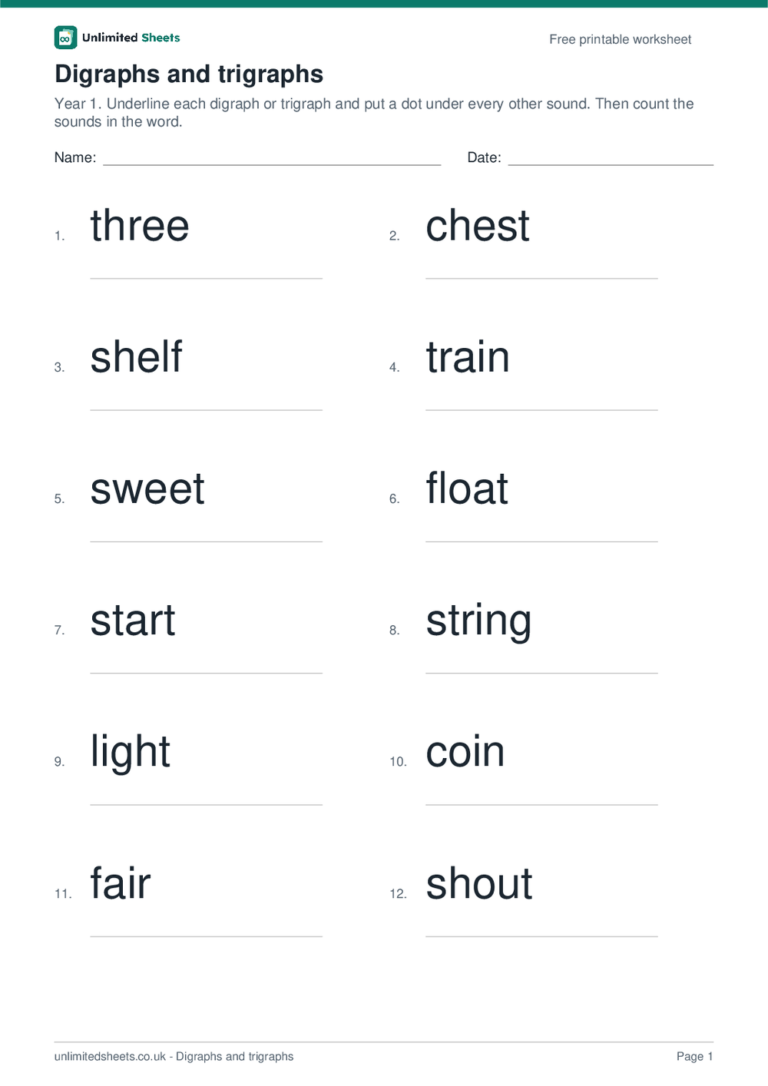
A digraph or trigraph counts as one sound. ship has four letters but three sounds (sh-i-p), and night has five letters but three sounds (n-igh-t). Children show this with sound buttons: a line under a digraph or trigraph and a dot under each single letter.
Digraphs worksheet
See the Phase 3 and Phase 5 pages, or phonemes and graphemes.
Sources
Letters and Sounds: principles and practice of high quality phonics (DfES, 2007); Choosing a phonics teaching programme (DfE, updated November 2026). GOV.UK. Contains public sector information licensed under the Open Government Licence v3.0.
Updated 23 November 2026.