
Year 2 time: what children learn in Year 2 and practice that marks itself. In Year 2, the national curriculum expects children to compare and sequence intervals of time.
What Year 2 children learn about time
From the statutory Year 2 programme of study for mathematics:
- Compare and sequence intervals of time
- Tell and write the time to five minutes, including quarter past/to the hour and draw the hands on a clock face to show these times
- Know the number of minutes in an hour and the number of hours in a day
Worked examples
Year 2: quarter past and quarter to
What time does the clock show? (quarter to two / quarter to three / five past nine / one o’clock)
- The long (minute) hand points to 9, which means 45 minutes past.
- The short (hour) hand is past halfway between 1 and 2.
- So the time is 1:45, or quarter to two.
Answer: quarter to two
Year 2: tell the time to five minutes
What time does the clock show? (half past one / one o’clock / five past one / two o’clock)
- The long (minute) hand points to 12, so it is exactly on the hour.
- The short (hour) hand is on 1.
- So the time is 1:00, or one o’clock.
Answer: one o’clock
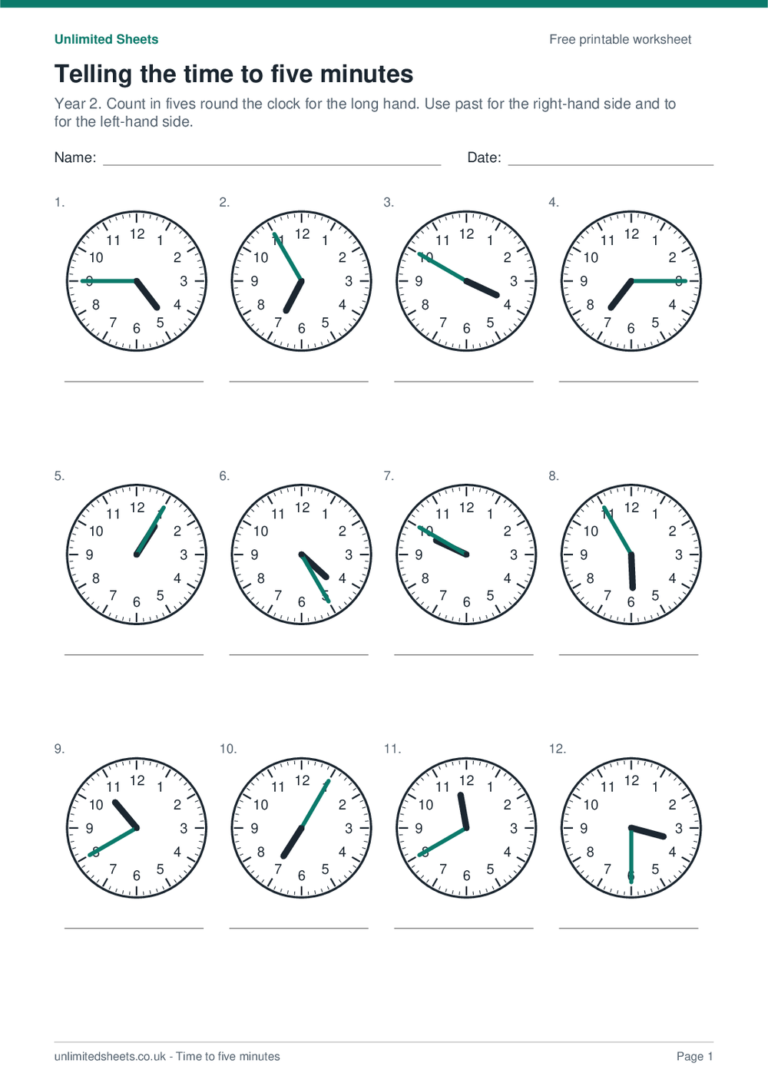
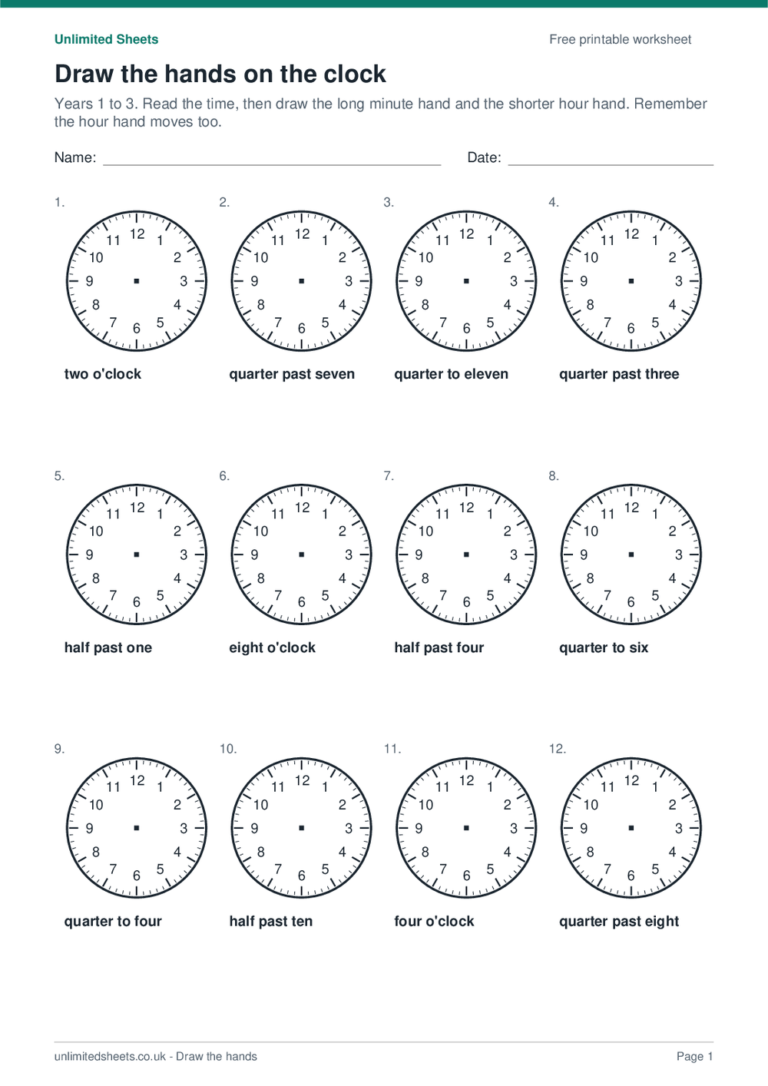
Year 2 time worksheets
Printable A4 PDFs. Practice sheets have the answers on the last page.
More time
Other years: Year 1 time, Year 3 time, Year 4 time, Year 5 time. See how time builds up across the primary years on the time overview page.
More Year 2 maths: counting, place value, addition, subtraction, times tables, fractions, shapes, statistics. Back to all Year 2 maths.