
Reception is the first year of primary school in England, for children aged 4 to 5. It is the last year of the early years foundation stage (EYFS). Here you will find free Reception maths practice that marks itself, printable worksheets and plain-English guides to the early learning goals and the assessments children meet this year.
Reception maths
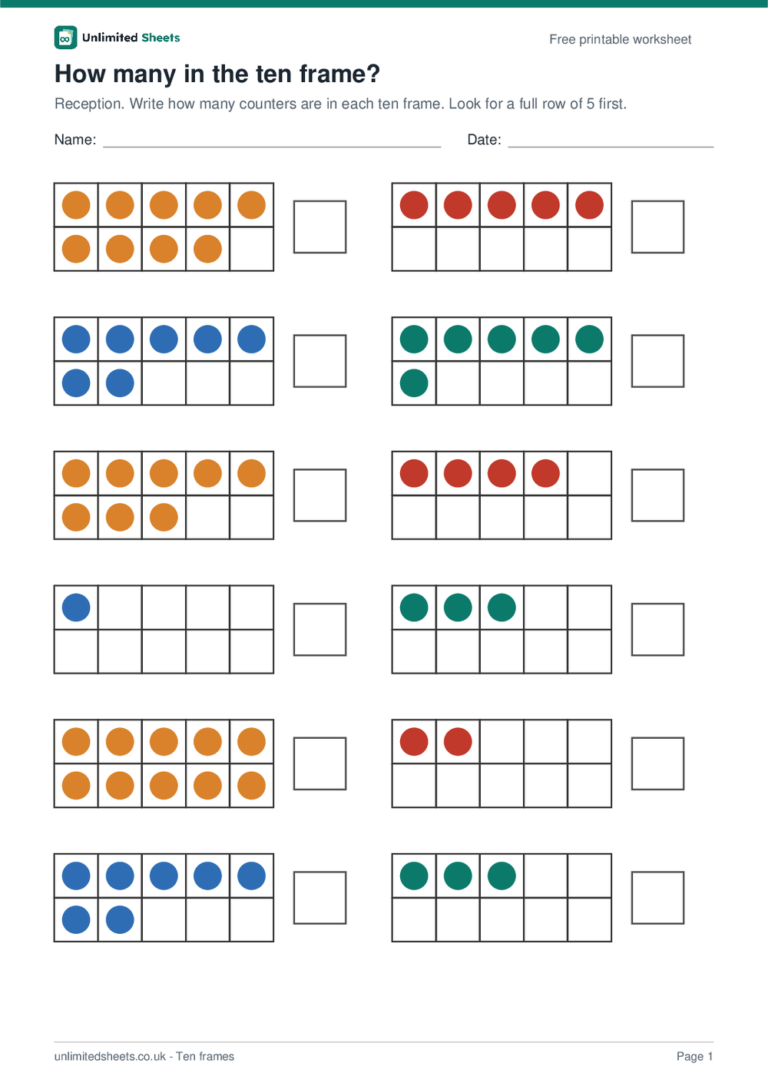
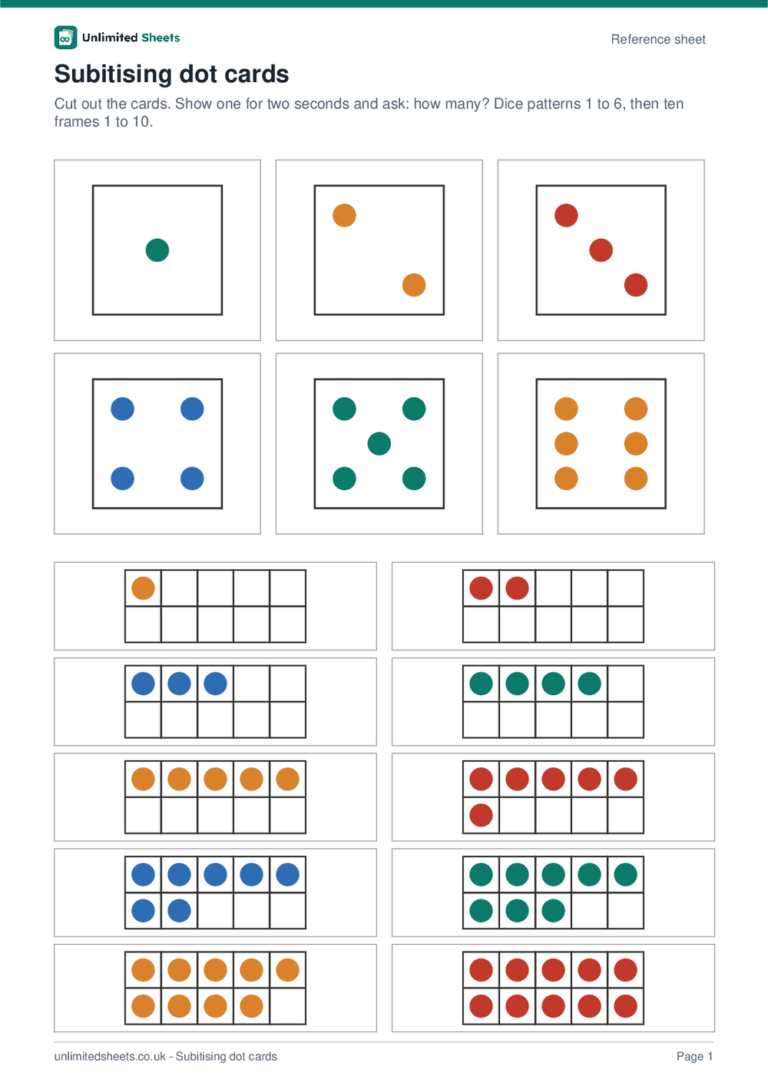
Counting to 10, subitising, ten frames, number bonds to 5 and 10, one more and one less, comparing groups and naming shapes, with practice and worksheets.
- Reception maths worksheets and activities
- Subitising: activities and dot cards
- Number bonds and the 100 square
Reception phonics
The sounds, tricky words and first words children read in Reception, with practice and printable sounds mats.
Guides for parents
- The 17 early learning goals in full, and what expected and emerging mean in the EYFS profile.
- The reception baseline assessment: what happens in the first six weeks, and why there is nothing to prepare.
Reception worksheets


What happens in Reception
Children learn mostly through play guided by adults, with more direct teaching of reading, writing and maths as the year goes on. The EYFS has 7 areas of learning: communication and language, personal, social and emotional development, and physical development are the prime areas; literacy, mathematics, understanding the world, and expressive arts and design are the specific areas. Children start learning phonics in Reception, usually working through Phase 2, Phase 3 and Phase 4, and take the phonics screening check in Year 1.
Next: Year 1
When your child moves up, Year 1 brings the national curriculum, with Year 1 maths, Year 1 English and the Year 1 common exception words.
Sources
Early years foundation stage (EYFS) statutory framework for group and school-based providers (from September 2026). Department for Education and Standards and Testing Agency, GOV.UK. Contains public sector information licensed under the Open Government Licence v3.0.
Updated 23 November 2026.