
Year 4 place value: what children learn in Year 4 and practice that marks itself. In Year 4, the national curriculum expects children to count in multiples of 6, 7, 9, 25 and 1000.
What Year 4 children learn about place value
From the statutory Year 4 programme of study for mathematics:
- Count in multiples of 6, 7, 9, 25 and 1000
- Find 1000 more or less than a given number
- Count backwards through zero to include negative numbers
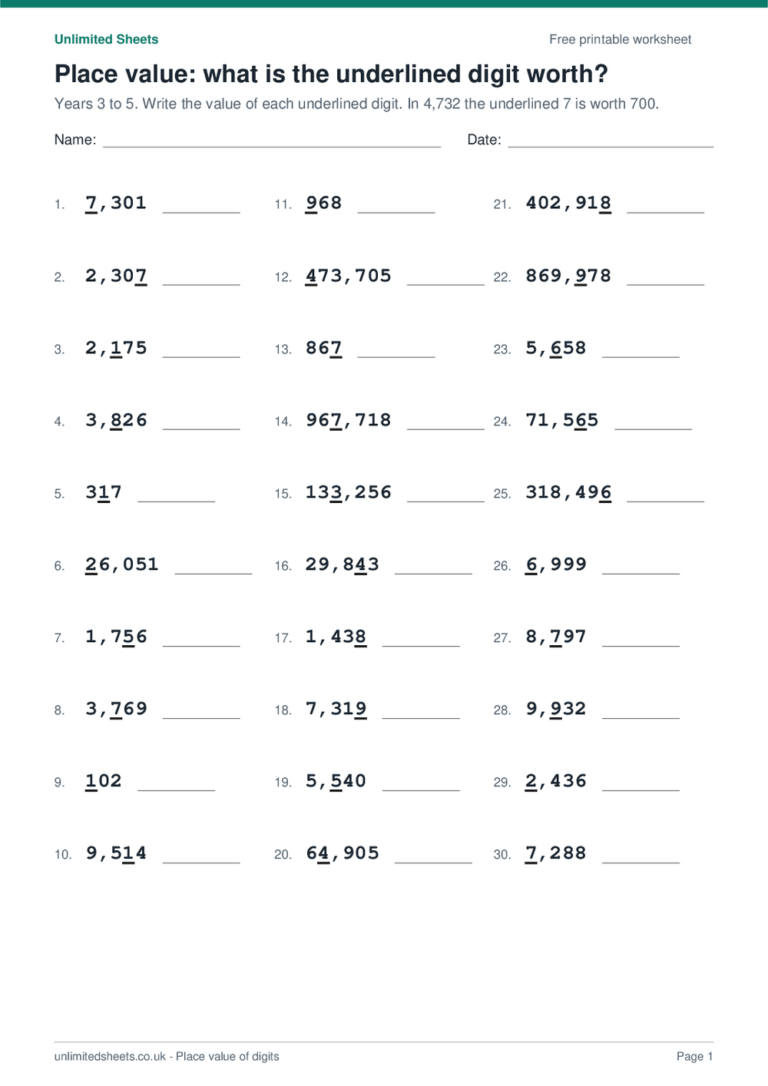
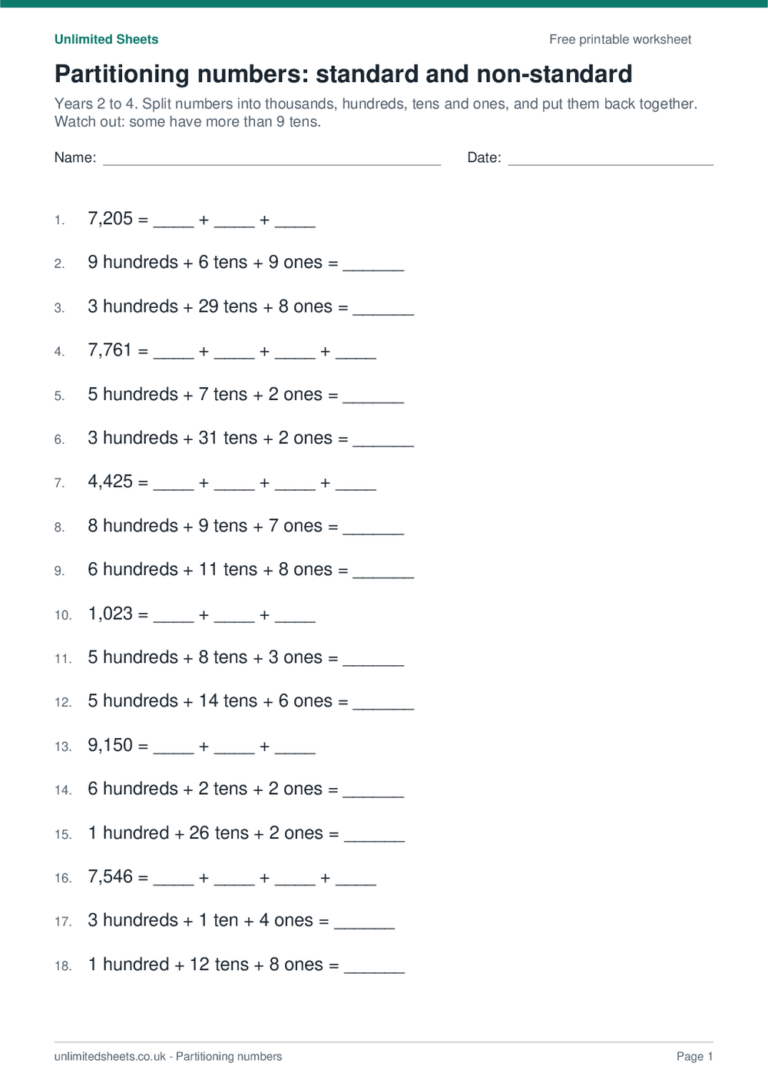
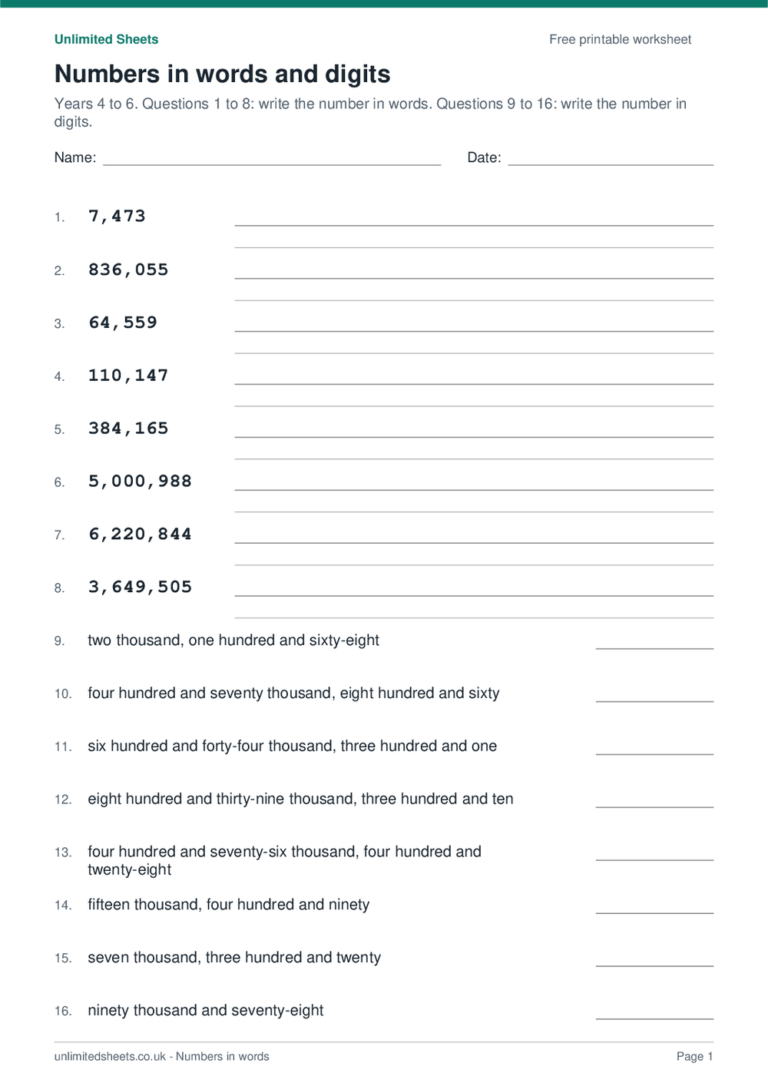
- Recognise the place value of each digit in a four-digit number (thousands, hundreds, tens, and ones)
- Order and compare numbers beyond 1000
- Identify, represent and estimate numbers using different representations
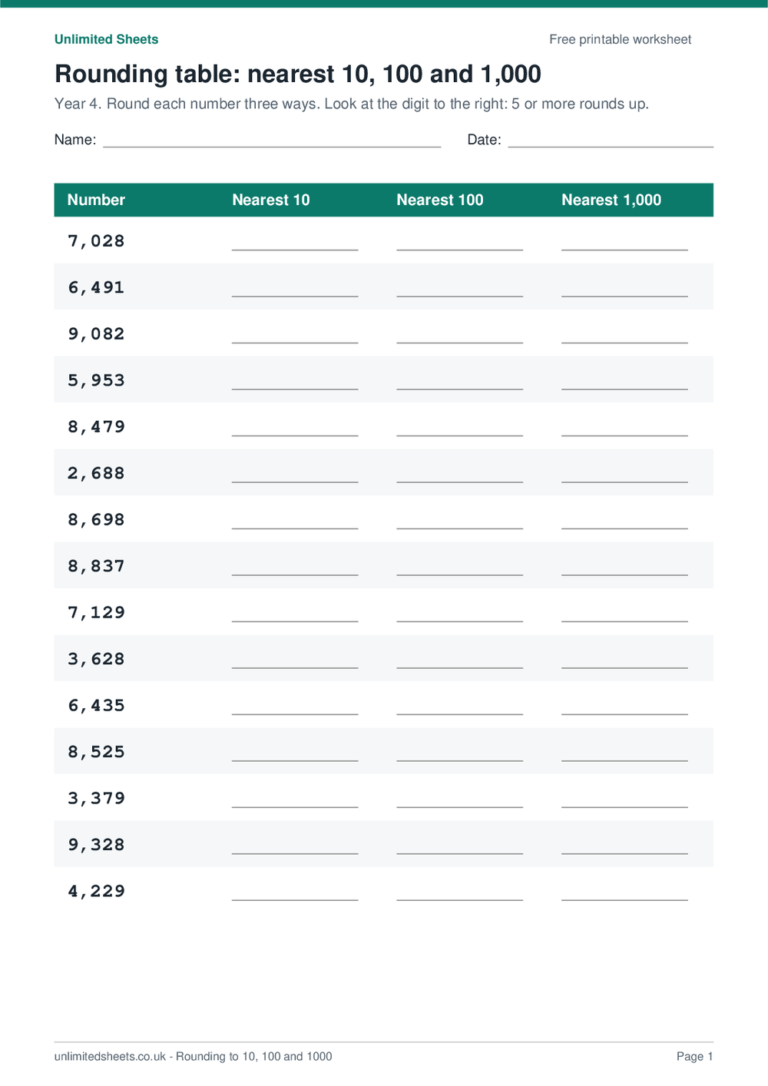
- Round any number to the nearest 10, 100 or 1000
- Solve number and practical problems that involve all of the above and with increasingly large positive numbers
- Read Roman numerals to 100 (I to C) and know that over time, the numeral system changed to include the concept of zero and place value
Worked examples
Years 2 to 4: compare numbers using <, > or =
110 ? 111 (< / = / >)
- Both numbers have the same number of digits. Compare from the left: the first different digits are 0 and 1.
- 110 < 111.
Answer: <
Year 4: round a decimal with 1 decimal place to the nearest whole number
Round 2.2 to the nearest whole number
- 2.2 is between 2 and 3. The halfway point is 2.5.
- It is below halfway, so round down to 2.
Answer: 2
Year 4 place value worksheets
Printable A4 PDFs. Practice sheets have the answers on the last page.
More place value
Other years: Year 2 place value, Year 3 place value, Year 5 place value, Year 6 place value. See how place value builds up across the primary years on the place value overview page.
More Year 4 maths: addition, subtraction, times tables, multiplication, division, fractions, decimals, time, measurement, area and perimeter, angles, coordinates, statistics, roman numerals. Back to all Year 4 maths.