
Year 6 measurement: what children learn in Year 6 and practice that marks itself. In Year 6, the national curriculum expects children to solve problems involving the calculation and conversion of units of measure, using decimal notation up to three decimal places where appropriate.
What Year 6 children learn about measurement
From the statutory Year 6 programme of study for mathematics:
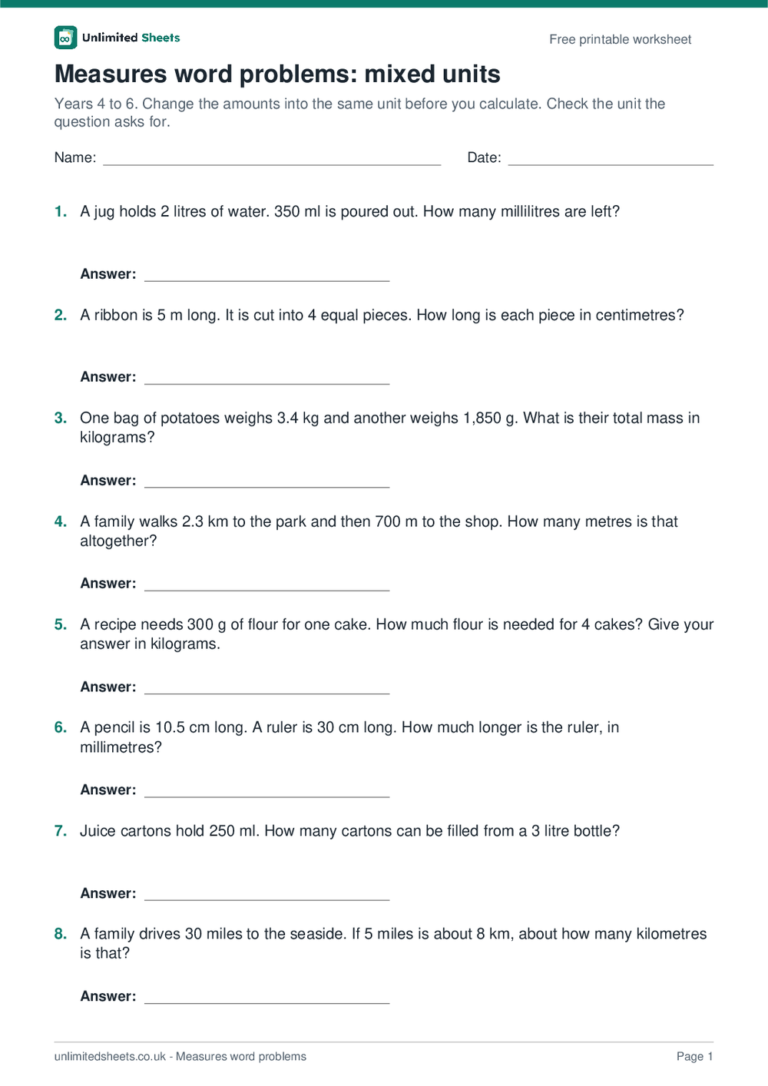
- Solve problems involving the calculation and conversion of units of measure, using decimal notation up to three decimal places where appropriate
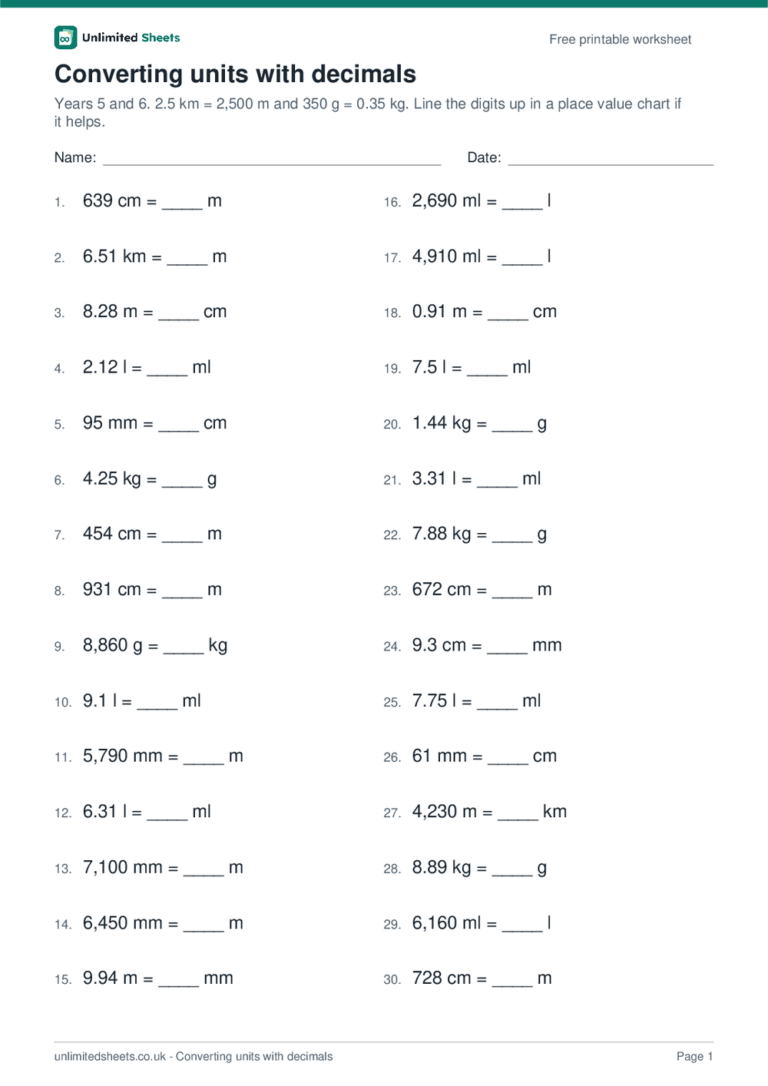
- Use, read, write and convert between standard units, converting measurements of length, mass, volume and time from a smaller unit of measure to a larger unit, and vice versa, using decimal notation to up to three decimal places
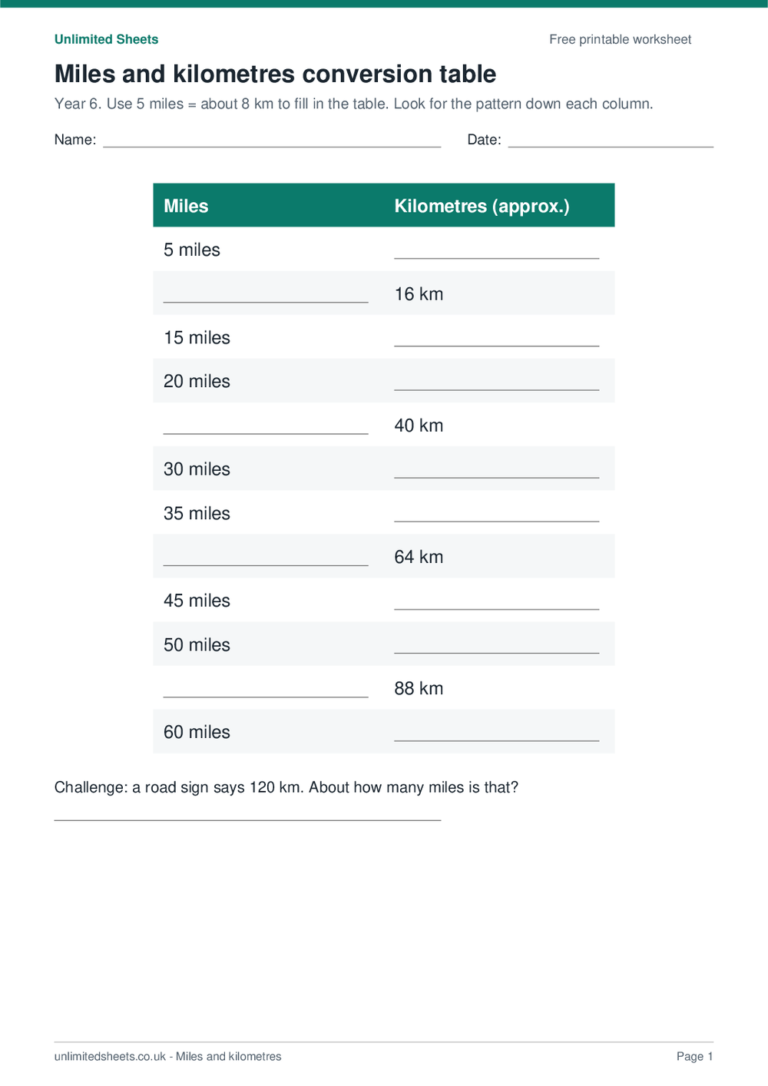
- Convert between miles and kilometres
- Recognise when it is possible to use formulae for area and volume of shapes
- Calculate, estimate and compare volume of cubes and cuboids using standard units, including cubic centimetres (cm³) and cubic metres (m³), and extending to other units (for example, mm³ and km³)
Worked examples
Year 6: conversions using up to 3 decimal places
4.192 km = ? m
- 1 kilometre = 1,000 metres.
- To change kilometres to metres, multiply by 1,000: 4.192 × 1,000 = 4,192.
Answer: 4,192
Year 6: convert between miles and kilometres using 5 miles ≈ 8 km
8 km ≈ ? miles
- 5 miles is about 8 kilometres.
- 8 km is 1 lots of 8 km, so it is about 1 × 5 = 5 miles.
Answer: 5
Year 6 measurement worksheets
Printable A4 PDFs. Practice sheets have the answers on the last page.
More measurement
Other years: Year 3 measurement, Year 4 measurement, Year 5 measurement. See how measurement builds up across the primary years on the measurement overview page.
More Year 6 maths: place value, multiplication, division, fractions, decimals, percentages, area and perimeter, angles, coordinates, statistics, BIDMAS. Back to all Year 6 maths.