
Year 4 punctuation: what children learn in Year 4 and practice that marks itself. In Year 4, the national curriculum expects children to fronted adverbials followed by a comma, such as Later that day, I heard the news..
What Year 4 children learn about punctuation
From English Appendix 2 (vocabulary, grammar and punctuation):
- Fronted adverbials followed by a comma, such as Later that day, I heard the news.
- Full punctuation of direct speech and apostrophes for plural possession
Worked examples
Year 4: plural possession (the girls' coats, the children's books)
Which shows the hats belonging to 2 men? (the mens hats / the men's hats / the mens' hats)
- Children, men, women and mice are plurals that do not end in s, so add an apostrophe and s.
- Answer: the men's hats.
Answer: the men's hats
Years 3 and 4: inverted commas and punctuation of speech
Which sentence punctuates the speech correctly? (Mia said “I love this song.” / Mia said, I love this song.” / Mia said, “I love this song.”)
- Put a comma after the reporting words, open the inverted commas, and keep the full stop, question mark or exclamation mark inside the closing inverted commas.
- Answer: Mia said, “I love this song.”
Answer: Mia said, “I love this song.”
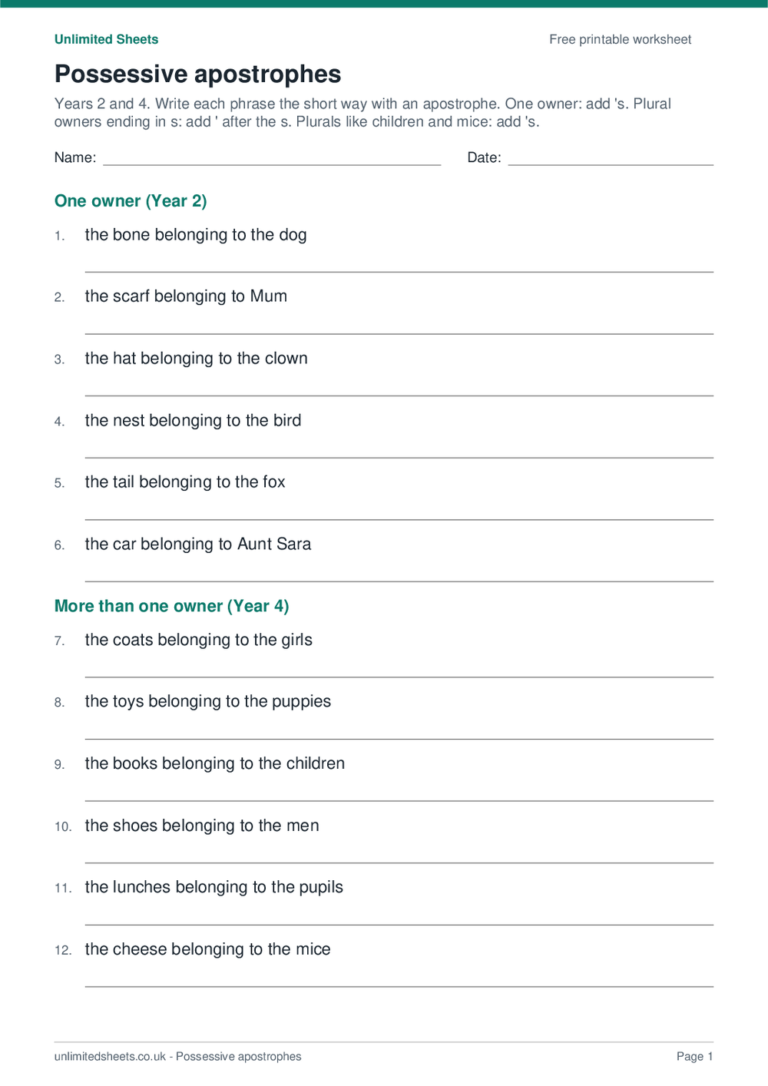
Year 4 punctuation worksheets
Printable A4 PDFs. Practice sheets have the answers on the last page.

More punctuation
Other years: Year 2 punctuation. See how punctuation builds up across the primary years on the punctuation overview page.
More Year 4 English: reading comprehension, spelling, grammar. Back to all Year 4 English.