
Year 1 spelling: what children learn in Year 1 and practice that marks itself. In Year 1, the national curriculum expects children to phonics: the sounds that letters and groups of letters make, and blending them to read and spell.
What Year 1 children learn about spelling
From English Appendix 1 (spelling):
- Phonics: the sounds that letters and groups of letters make, and blending them to read and spell
- The 45 Year 1 common exception words, such as said, friend and school
- Days of the week, plurals with -s and -es, and endings such as -ing, -ed and -er
- The prefix un-, as in unkind and untie
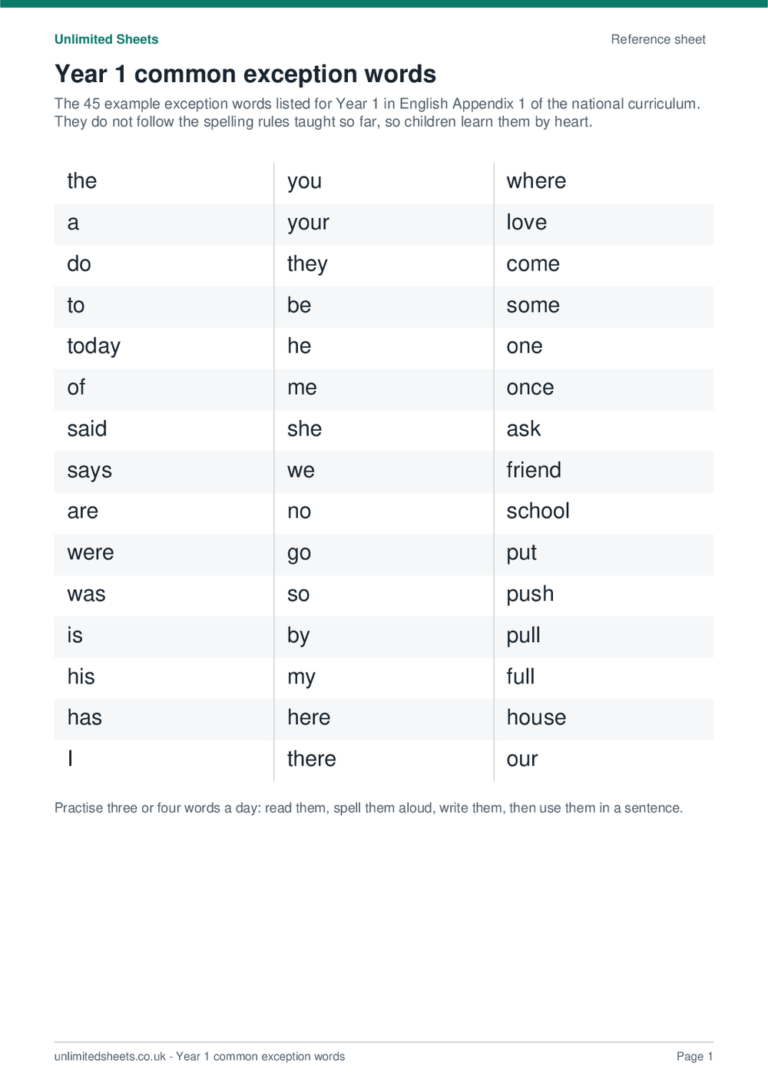
Year 1 common exception words
| the | his | go | ask |
| a | has | so | friend |
| do | I | by | school |
| to | you | my | put |
| today | your | here | push |
| of | they | there | pull |
| said | be | where | full |
| says | he | love | house |
| are | me | come | our |
| were | she | some | |
| was | we | one | |
| is | no | once |
Worked examples
Year 1 common exception words: listen, then type
- The word is "the" (3 letters): t h e.
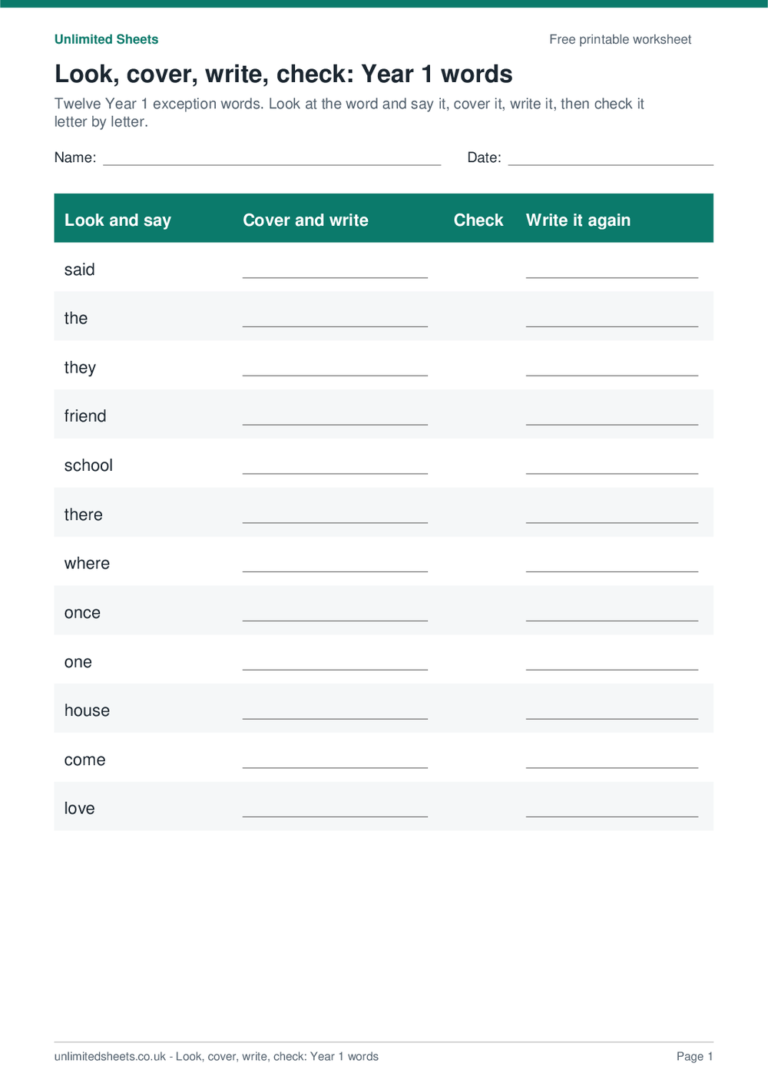
- Look at it, say it, cover it, write it, then check. Underline the part you got wrong and practise just that part.
Answer: the
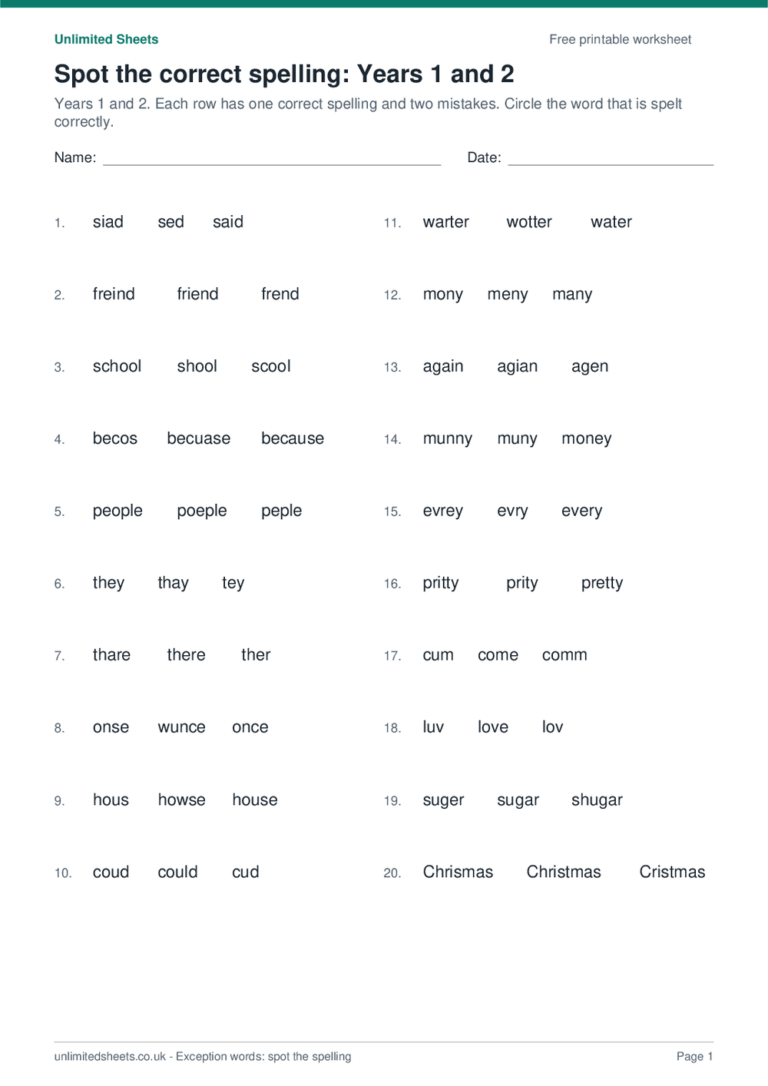
Years 1 and 2: pick the correct spelling
Which spelling is correct? (sed / siad / said)
- The correct spelling is "said".
- Learn the tricky part by writing the word three times and checking each letter.
Answer: said
Year 1 spelling worksheets
Printable A4 PDFs. Practice sheets have the answers on the last page.
More spelling
Other years: Year 2 spelling, Year 3 spelling, Year 4 spelling, Year 5 spelling, Year 6 spelling. See how spelling builds up across the primary years on the spelling overview page.
More Year 1 English: reading comprehension. Back to all Year 1 English.