
Year 6 angles: what children learn in Year 6 and practice that marks itself. In Year 6, the national curriculum expects children to draw 2-D shapes using given dimensions and angles.
What Year 6 children learn about angles
From the statutory Year 6 programme of study for mathematics:
- Draw 2-D shapes using given dimensions and angles
- Compare and classify geometric shapes based on their properties and sizes and find unknown angles in any triangles, quadrilaterals, and regular polygons
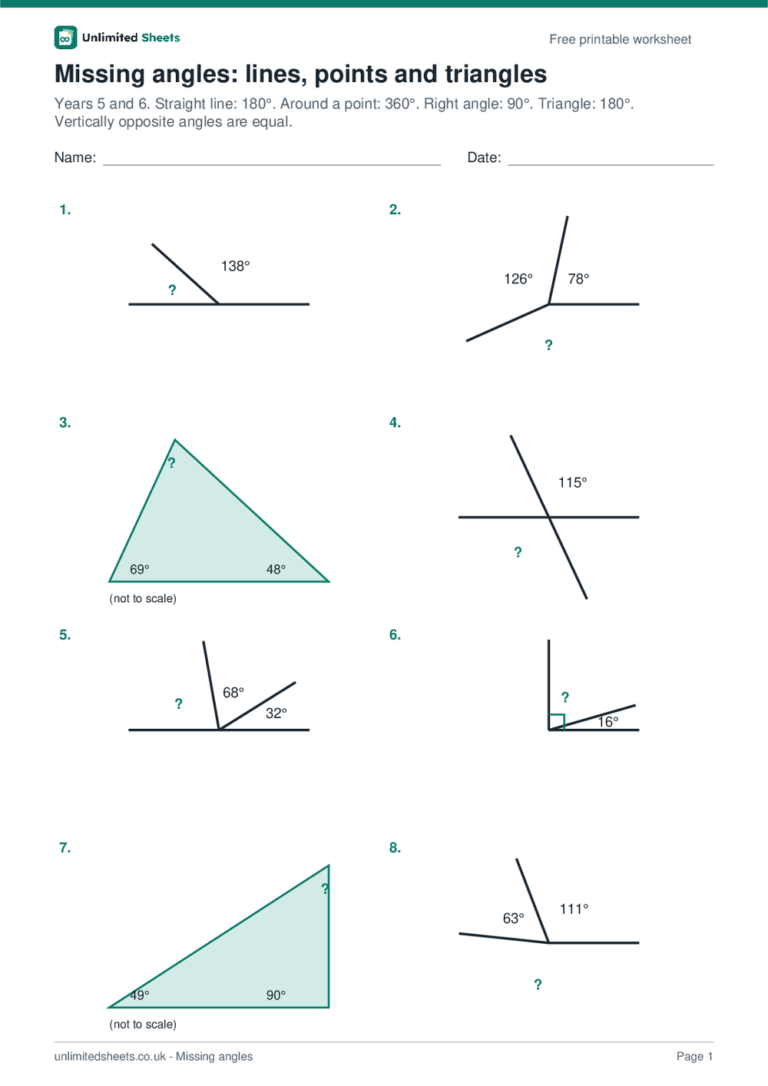
- Recognise angles where they meet at a point, are on a straight line, or are vertically opposite, and find missing angles
Worked example
Year 6: missing angles in triangles and quadrilaterals, and vertically opposite angles
The angles in a triangle add up to 180°. What is the missing angle?
- The angles in a triangle add up to 180°.
- 180 − 55 − 45 = 80°.
Answer: 80
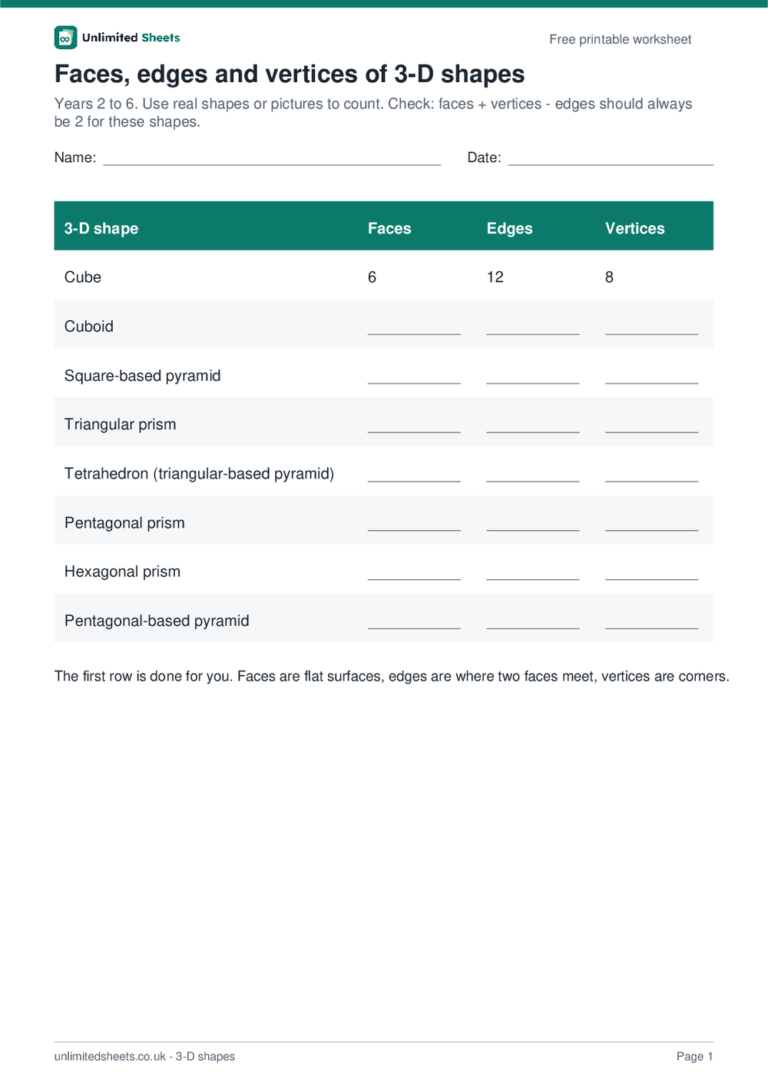
Year 6 angles worksheets
Printable A4 PDFs. Practice sheets have the answers on the last page.
More angles
Other years: Year 3 angles, Year 4 angles, Year 5 angles. See how angles builds up across the primary years on the angles overview page.
More Year 6 maths: place value, multiplication, division, fractions, decimals, percentages, measurement, area and perimeter, coordinates, statistics, BIDMAS. Back to all Year 6 maths.