
Year 6 grammar: what children learn in Year 6 and practice that marks itself. In Year 6, the national curriculum expects children to the passive voice, such as the window was broken.
What Year 6 children learn about grammar
From English Appendix 2 (vocabulary, grammar and punctuation):
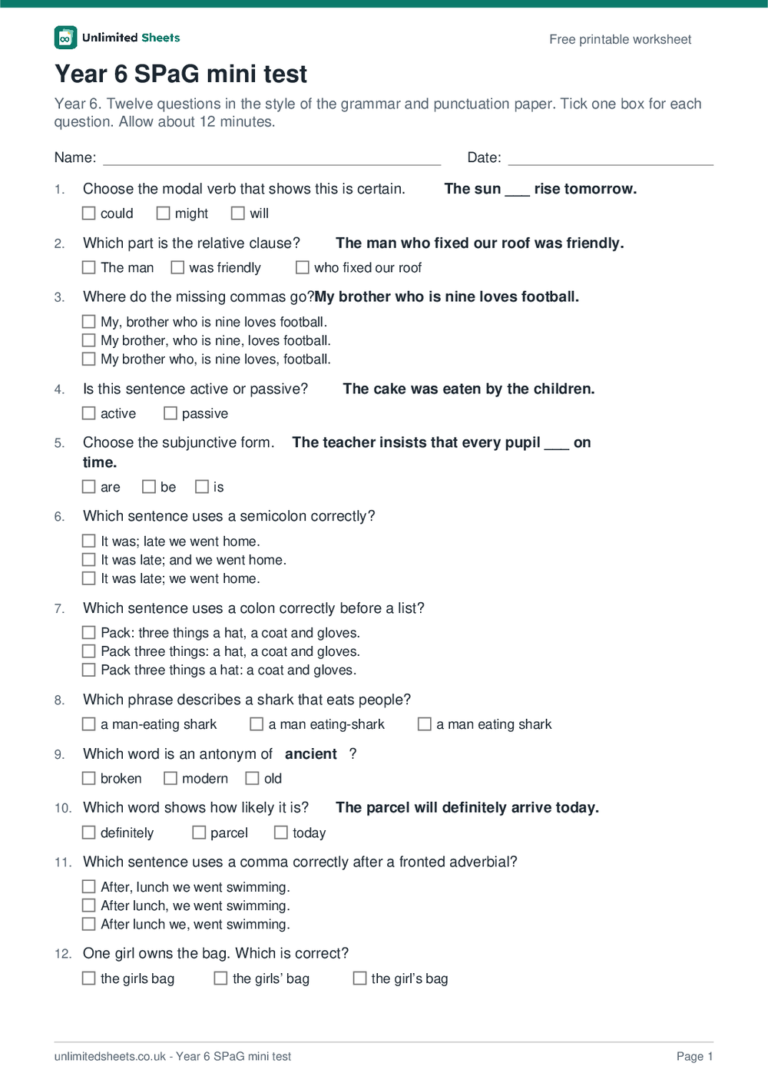
- The passive voice, such as the window was broken
- Formal structures, including the subjunctive, such as If I were
- Cohesive devices across paragraphs, such as on the other hand
- Semicolons, colons and dashes between clauses, colons before lists, bullet points and hyphens
Worked example
Year 6: the subjunctive
Choose the subjunctive form: If I ___ you, I would take an umbrella.
- The sentence imagines something that is not true: I am not you.
- In an imagined situation, formal English uses the subjunctive were, even after I.
Answer: were
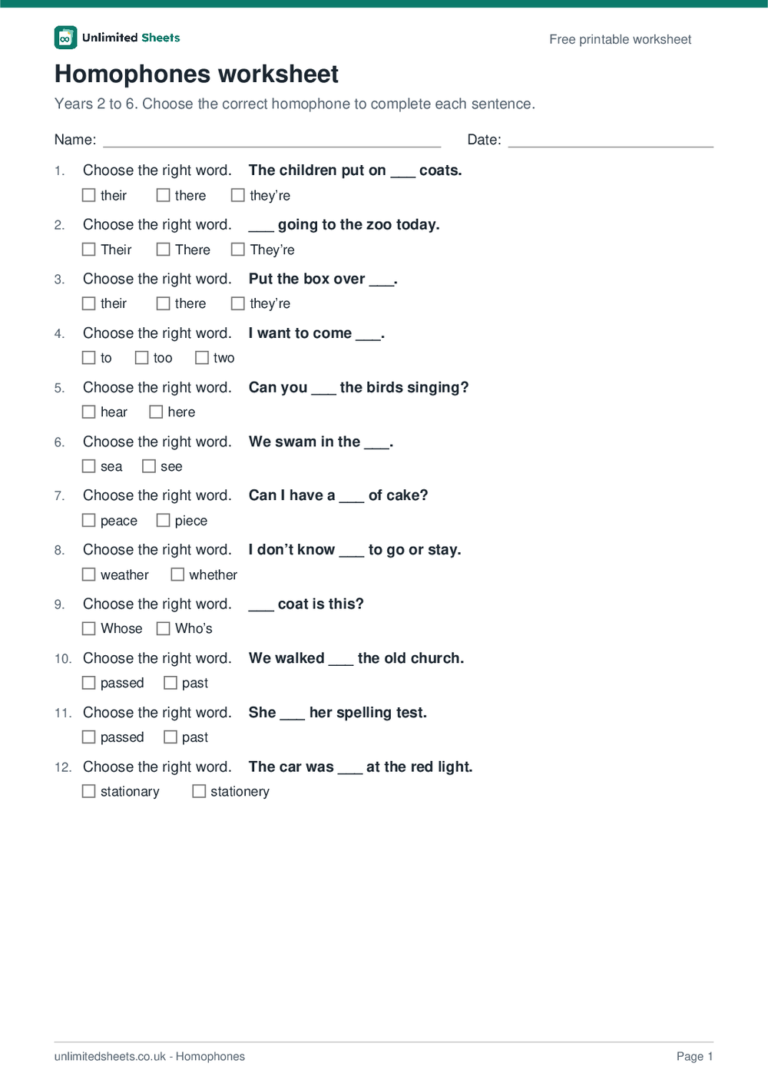
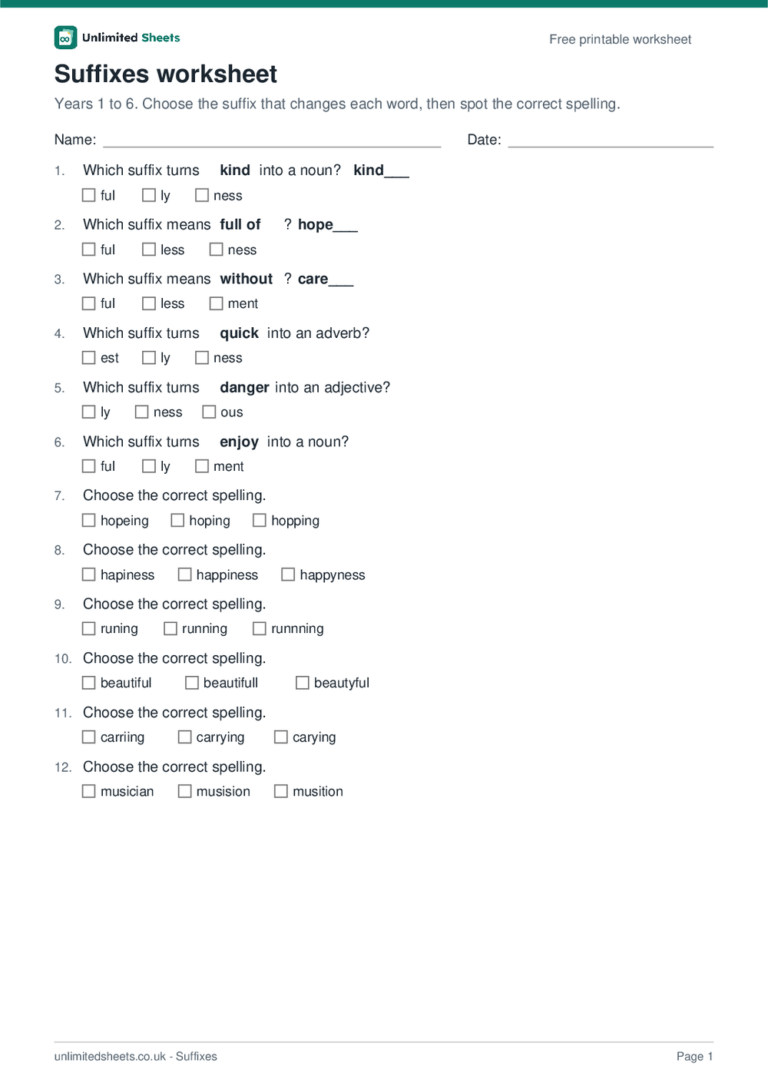
Year 6 grammar worksheets
Printable A4 PDFs. Practice sheets have the answers on the last page.

More grammar
Other years: Year 2 grammar, Year 3 grammar, Year 4 grammar, Year 5 grammar. See how grammar builds up across the primary years on the grammar overview page.
More Year 6 English: reading comprehension, spelling. Back to all Year 6 English.