
Phase 4 teaches no new sounds. Instead children use the Phase 2 and 3 graphemes to read and spell longer words with adjacent consonants, such as jump, frog and string. In Letters and Sounds it lasts 4 to 6 weeks, usually at the end of Reception.
Adjacent consonants
Adjacent consonants are two or three consonant sounds next to each other, each said separately: in frog you hear f and r. Phonics teachers write the word shapes with C for consonant and V for vowel:
| Pattern | Examples |
|---|---|
| CVCC | jump, tent, milk, help, hand, nest, lamp, gift |
| CCVC | frog, flag, stop, spin, trip, drum, clap, swim |
| CCVCC | crisp, stamp, trust |
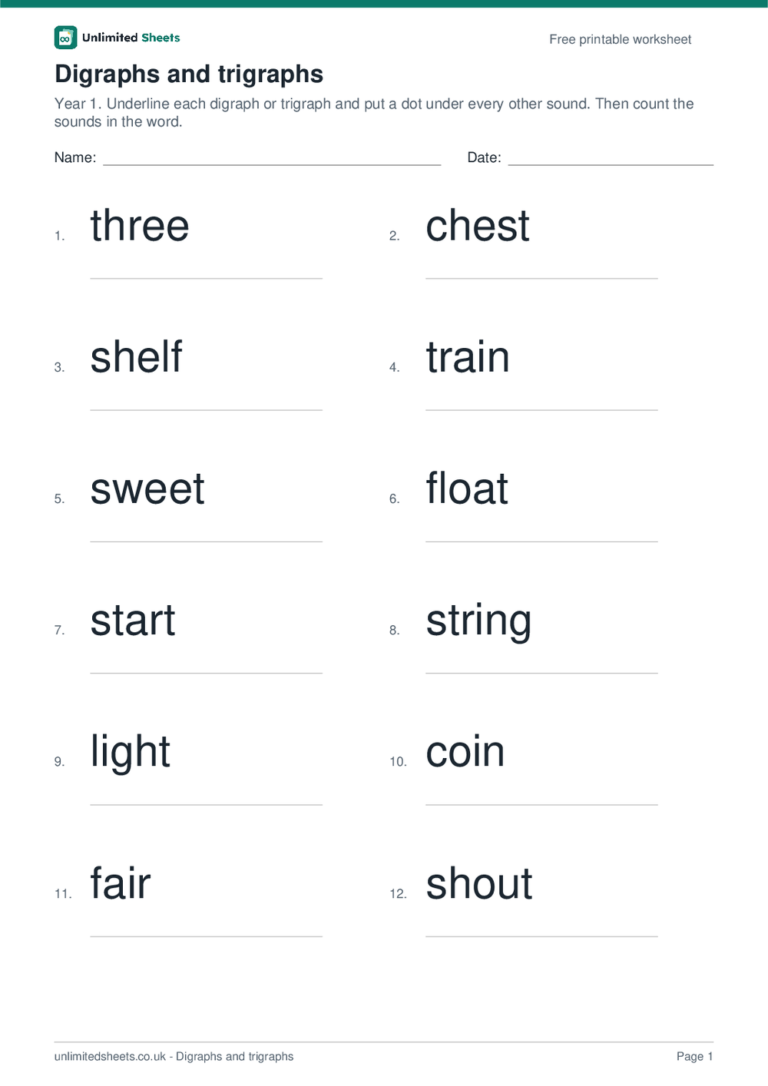
| With digraphs | chest, shelf, train, sweet, float, start, three |
| CCCVC | string |
The commonest mistake is missing a sound out: reading frog as fog. Ask your child to point to each grapheme as they say it.
Phase 4 tricky words
said · so · have · like · some · come · were · there · little · one · do · when · out · what
By the end of Phase 4 children should read these and spell the Phase 3 tricky words he, she, we, me, be, was, my, you, her, they, all and are.
Phase 4 practice
Your school’s scheme may differ. Many schools use one of the 45 phonics programmes validated by the Department for Education, such as Little Wandle Letters and Sounds Revised or Read Write Inc. They teach the same sounds, but in their own order and with their own names for the stages. Schools do not have to use a validated programme, but resources at home work best when they match the school’s order, so ask the class teacher which scheme they use.
Phase 4 printables

Before and after
Back to Phase 3, on to Phase 5, or practise CVC, CVCC and CCVC words.
Sources
Letters and Sounds: principles and practice of high quality phonics (DfES, 2007); Choosing a phonics teaching programme (DfE, updated November 2026). GOV.UK. Contains public sector information licensed under the Open Government Licence v3.0.
Updated 23 November 2026.