
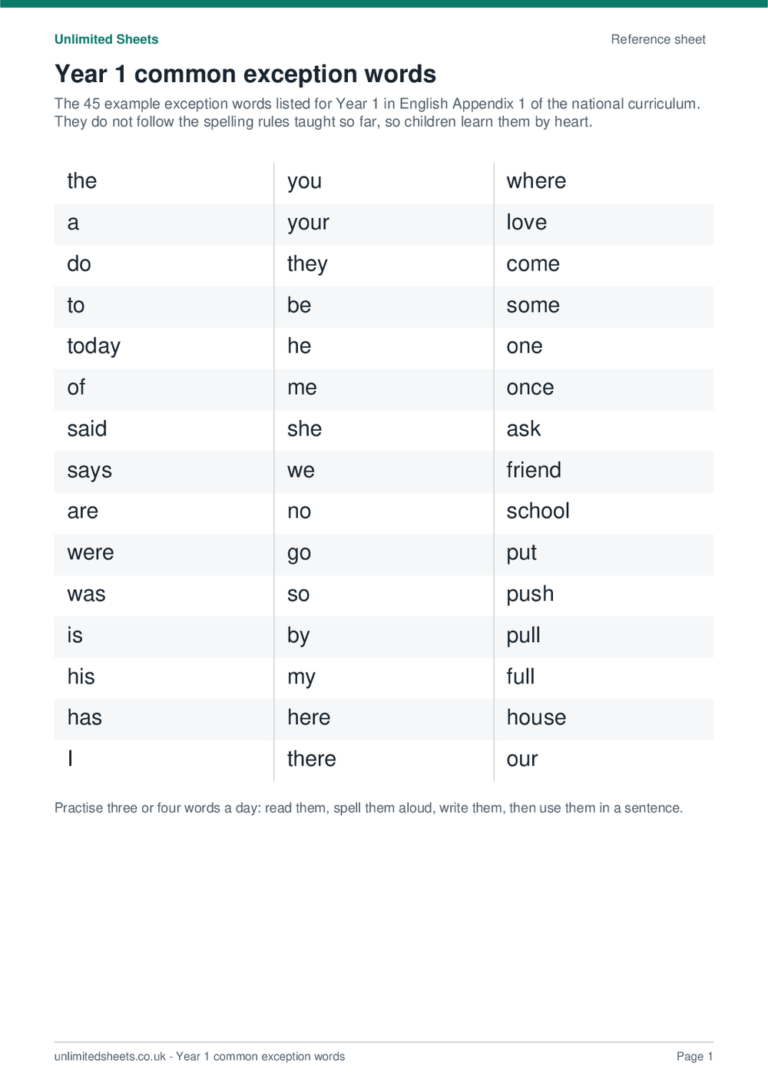
The Year 1 common exception words are 45 everyday words that children cannot spell yet by sounding them out, such as said, was, friend and school. They are listed in English Appendix 1 of the national curriculum. Here is the full list, grouped by what makes each word tricky, with practice that marks itself and printable sheets.
The full list (45 words)
| the | his | go | ask |
| a | has | so | friend |
| do | I | by | school |
| to | you | my | put |
| today | your | here | push |
| of | they | there | pull |
| said | be | where | full |
| says | he | love | house |
| are | me | come | our |
| were | she | some | |
| was | we | one | |
| is | no | once |
Practise the words
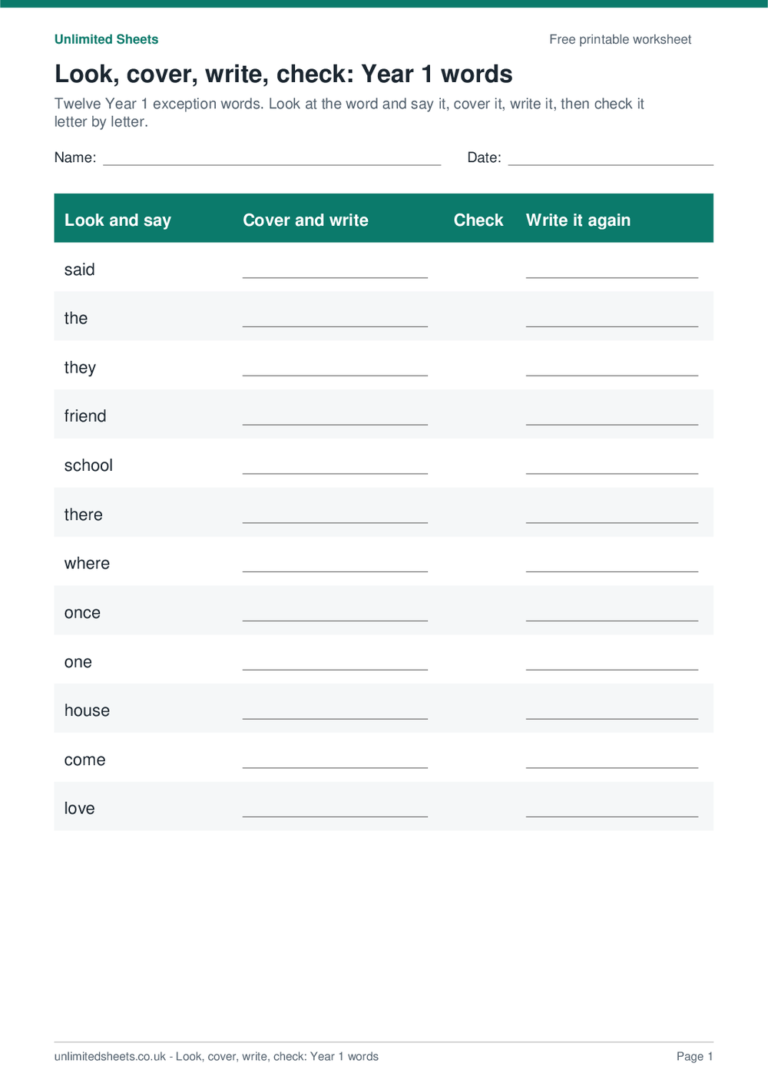
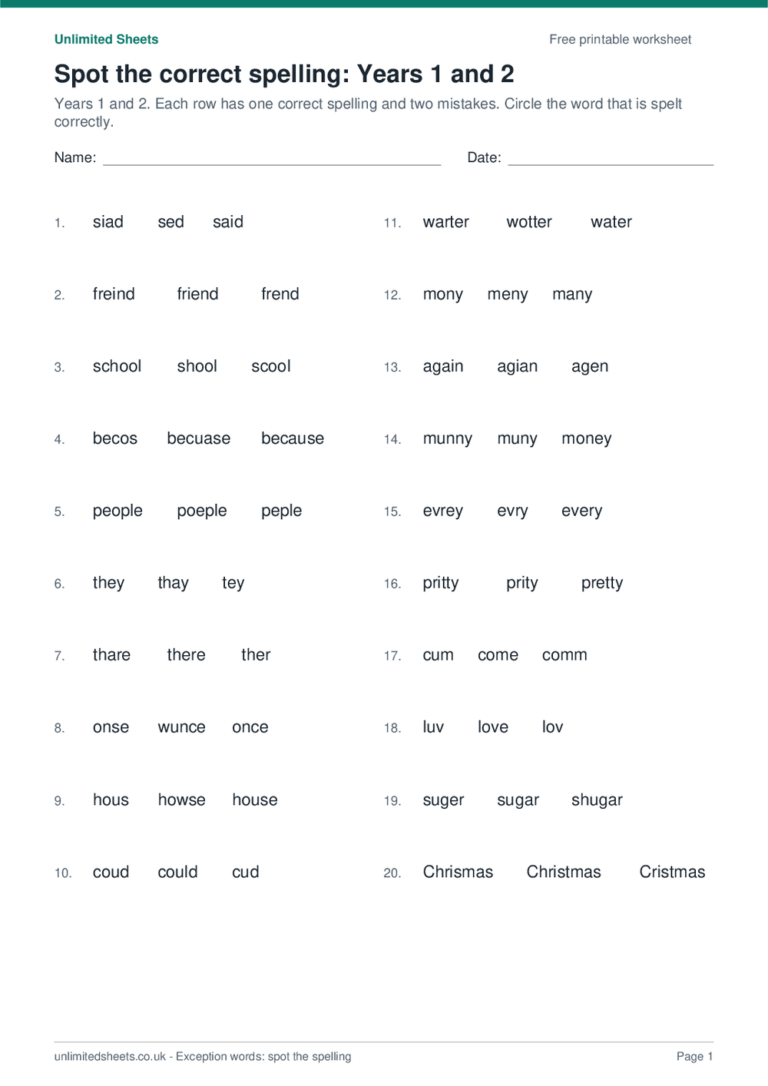
Look, cover, write shows each word for a few seconds, then asks your child to type it from memory. Spot it shows the word spelt correctly next to common misspellings. Both mark themselves.
The words grouped by pattern
Learning words in groups that share a trap is faster than learning them in alphabetical order.
| Pattern | Words from the list | Tip |
|---|---|---|
| Small words with surprising vowels | the, a, do, to, of, said, says, are, were, was, is, his, has | Say the word the way it is spelt: “s-a-i-d”. Silly voices help. |
| o that sounds like u | love, come, some, one, once | One and once start with a /w/ sound that is not written at all. |
| One vowel at the end | be, he, me, she, we, no, go, so | The single e says /ee/ and the single o says /oh/. |
| y that sounds like igh | by, my | Short words ending in y often say /igh/. |
| The -ere family | here, there, where | Spot here inside there and where: all three are about places. |
| u that sounds like oo | put, push, pull, full | Learn them together: they share a sound and a spelling. |
| People words | I, you, your, they | I is always a capital letter. |
| Others to learn by heart | today, ask, friend, school, house, our | Find the tricky part: the ie in friend, the ch in school. |
How to learn the list
With 45 words and about 39 weeks in the school year, learning two new words a week covers the whole list with time to spare for revision. Start with the words your child meets most in reading books: the, said, was, you and they.
- Find the tricky part of each word and underline it.
- Look, say, cover, write, check a few words at a time.
- Use each word in a sentence the same day.
- Revisit last week’s words before starting new ones.
Exception words and phonics
Year 1 children are also learning phonics and take the phonics screening check in June. Exception words are taught alongside phonics, not instead of it: most words can be sounded out, and these are the everyday ones that cannot yet. Some, such as today and house, stop being exceptions once the matching sound has been taught.
Printable sheets
A printable copy of the list, a look-cover-write-check sheet and a spot-the-spelling worksheet with answers.
Related pages
Next steps: the Year 2 common exception words, Year 1 spelling and Year 1 English. Both lists side by side are on the common exception words page.
Sources
National curriculum in England: English programmes of study, English Appendix 1: spelling, Department for Education, GOV.UK.
Updated 23 November 2026.