
Reading comprehension means understanding what you read: finding facts, working out what words mean and reading between the lines. Here are twenty-four original texts for Years 1 to 6, four per year, each with questions that mark themselves and explain every answer using evidence from the text.
Choose a text below. Read it all the way through first, then answer the questions underneath. You can scroll back up to the text as often as you like: good readers check.
The texts by year group
Every text was written for this site. Each year has four texts of different kinds, so children practise reading stories, information, instructions, letters, poems, a newspaper report, a playscript, biographies, a balanced argument and a persuasive letter.
| Year | Title | Type | Words | Questions |
|---|---|---|---|---|
| Year 1 | Pip and the Puddle | Story | 80 | 6 |
| Year 1 | Hedgehogs | Information | 70 | 6 |
| Year 1 | Sam and the Kite | Story | 80 | 6 |
| Year 1 | Busy Bees | Information | 70 | 6 |
| Year 2 | The Tallest Tower | Story | 170 | 6 |
| Year 2 | How to Grow a Cress Egg Head | Instructions | 110 | 6 |
| Year 2 | Emperor Penguins | Information | 110 | 7 |
| Year 2 | A Letter from Grandpa | Letter | 110 | 7 |
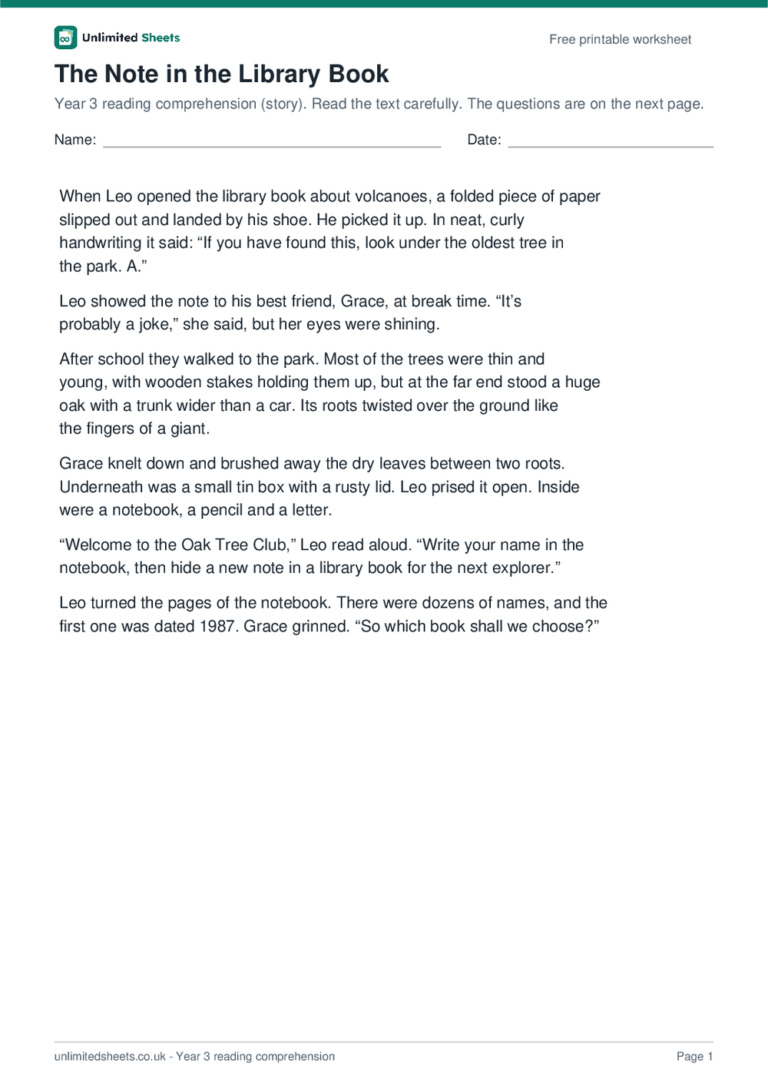
| Year 3 | The Note in the Library Book | Story | 210 | 7 |
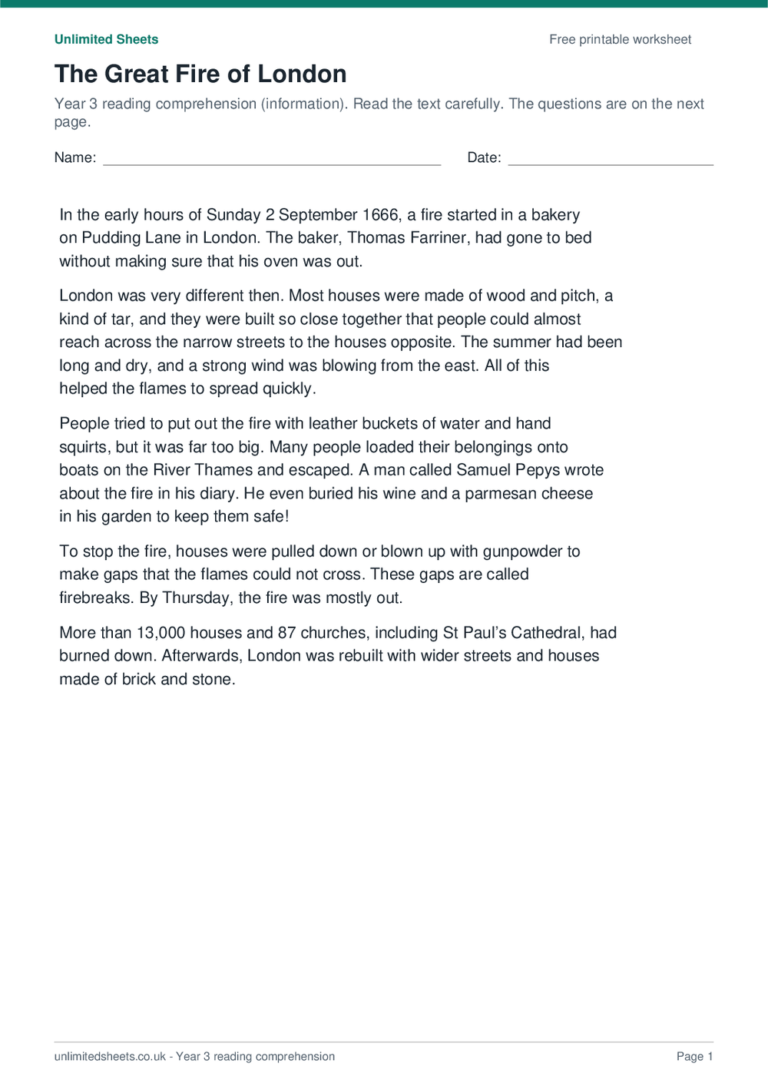
| Year 3 | The Great Fire of London | Information | 220 | 7 |
| Year 3 | Volcanoes | Information | 180 | 7 |
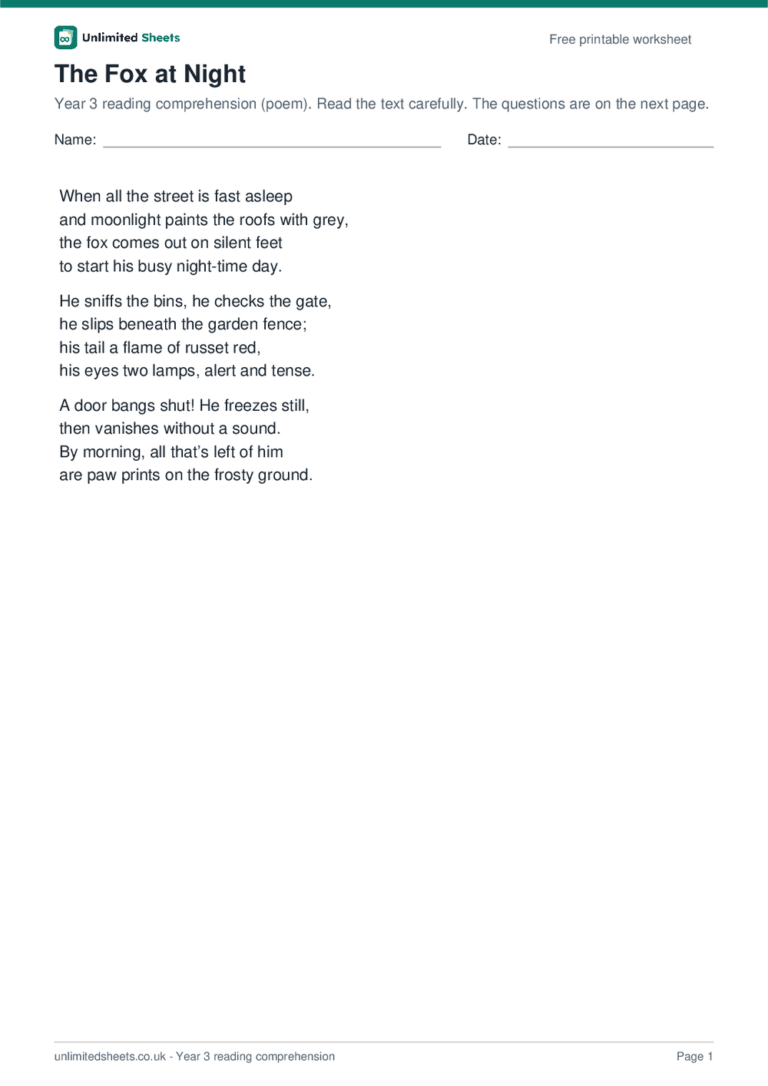
| Year 3 | The Fox at Night | Poem | 80 | 7 |
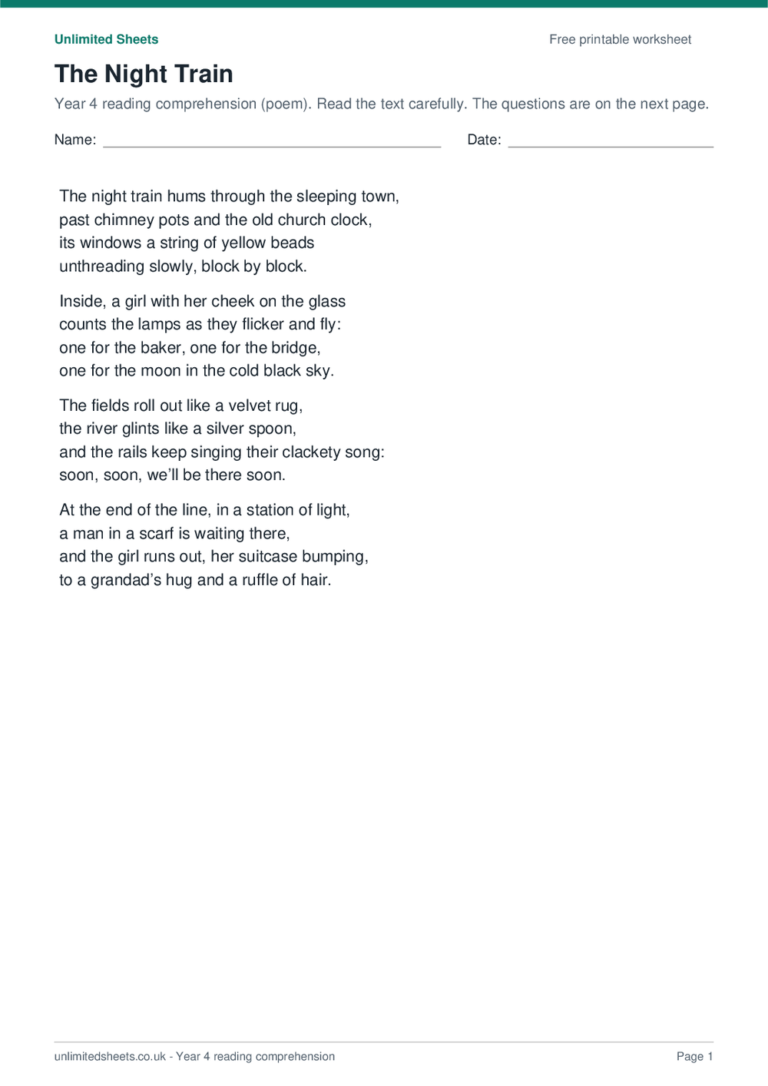
| Year 4 | The Night Train | Poem | 130 | 7 |
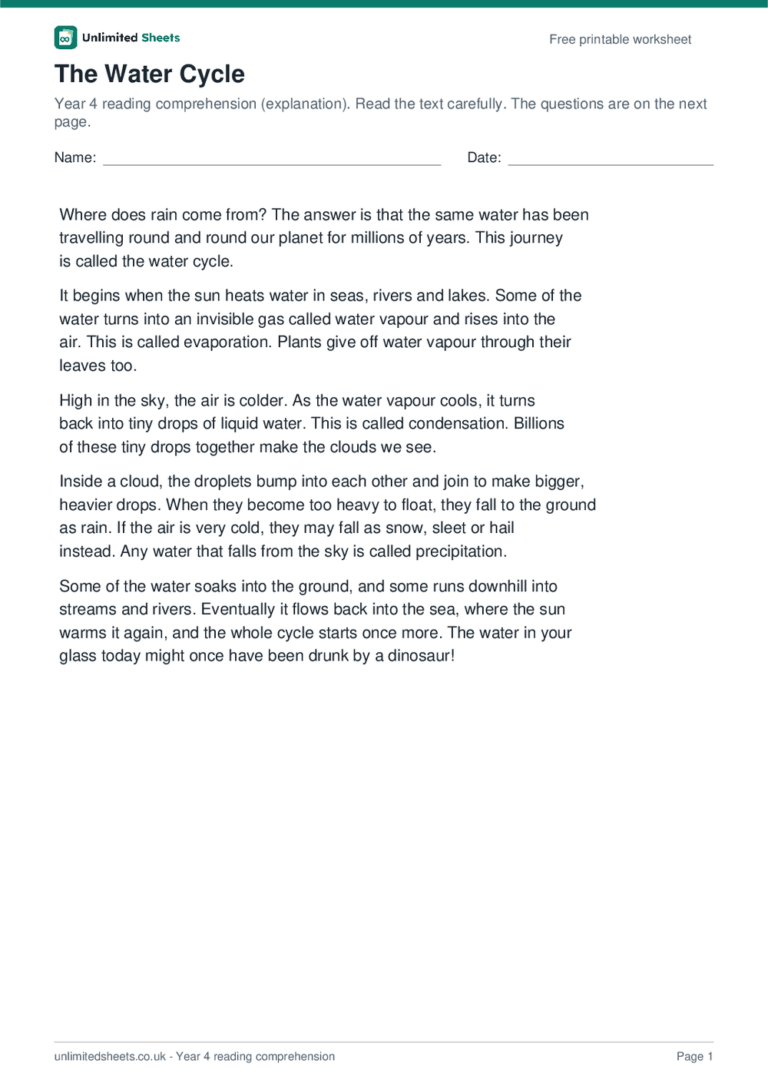
| Year 4 | The Water Cycle | Explanation | 220 | 7 |
| Year 4 | The Key Under the Mat | Story | 200 | 7 |
| Year 4 | The Romans in Britain | Information | 180 | 7 |
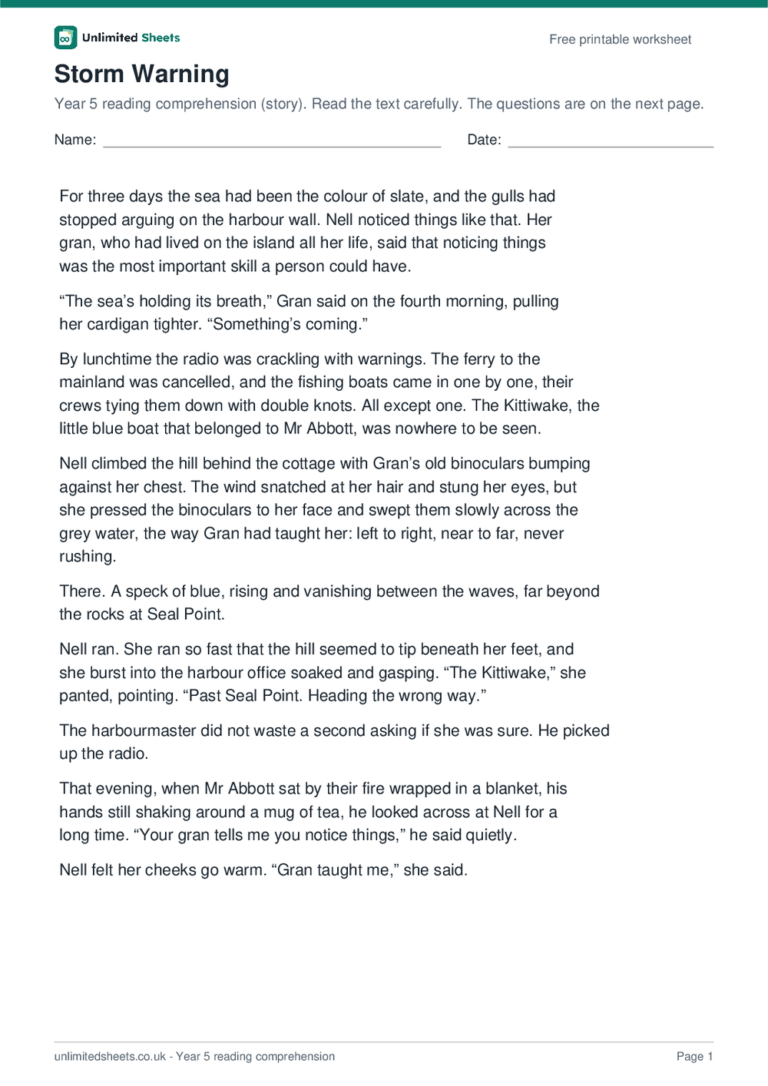
| Year 5 | Storm Warning | Story | 300 | 7 |
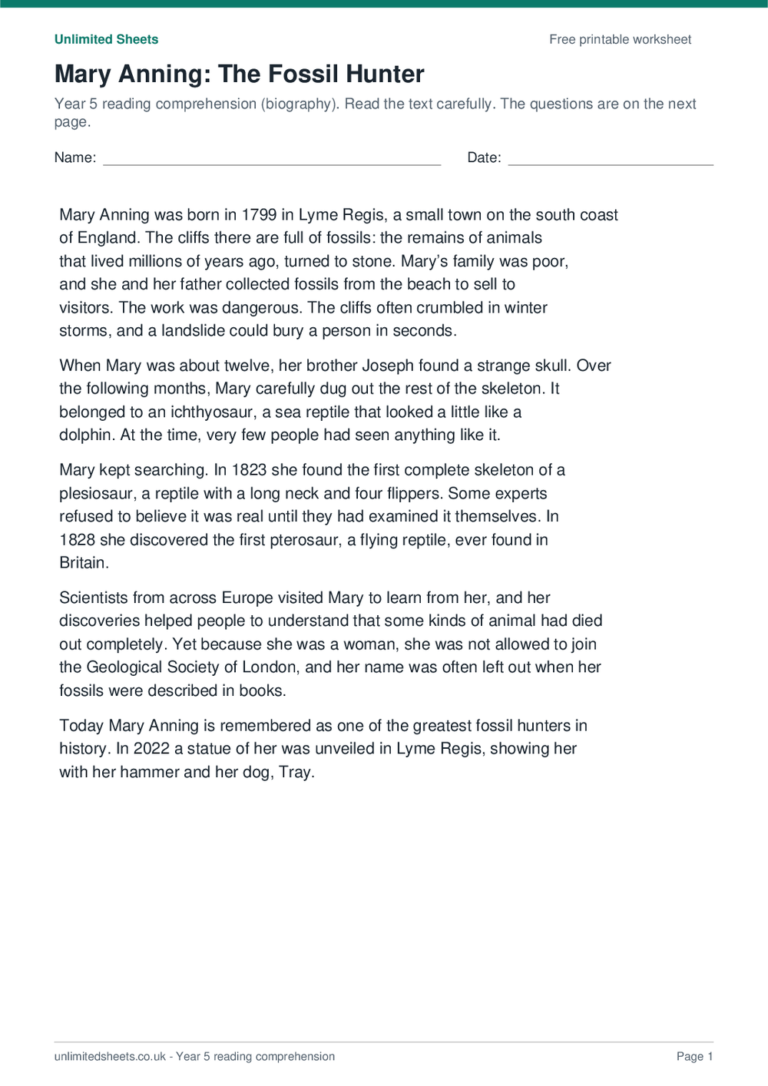
| Year 5 | Mary Anning: The Fossil Hunter | Biography | 270 | 7 |
| Year 5 | Village Pond Rescue | Newspaper report | 200 | 7 |
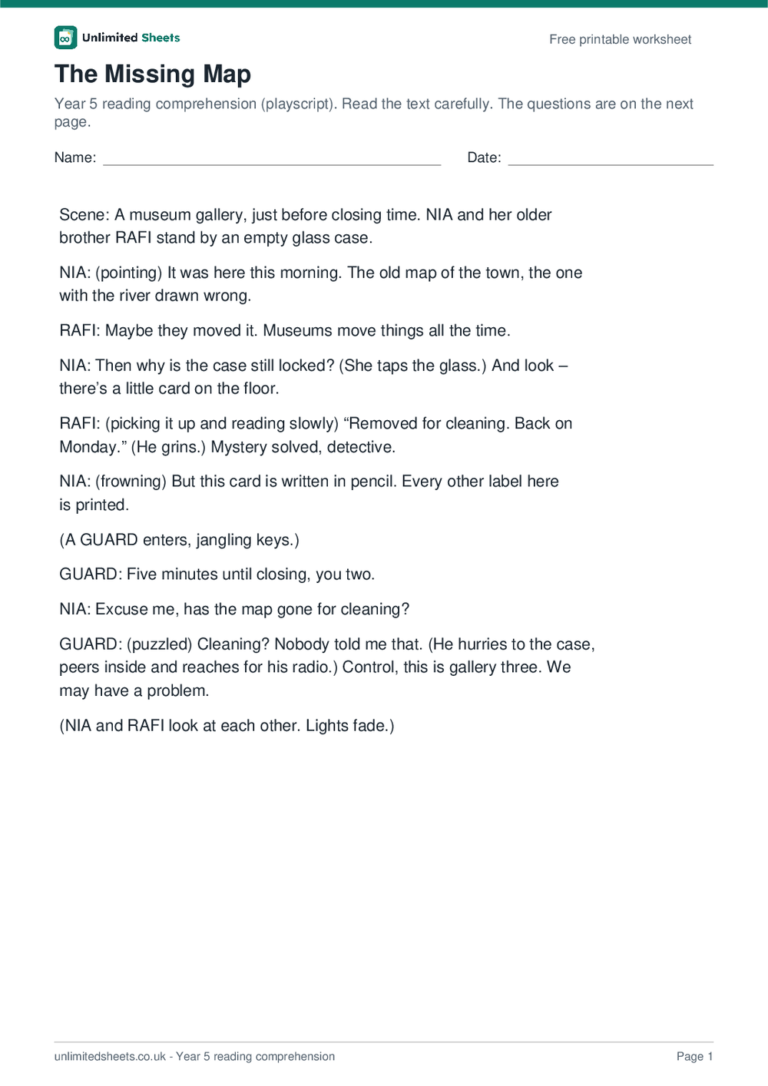
| Year 5 | The Missing Map | Playscript | 170 | 7 |
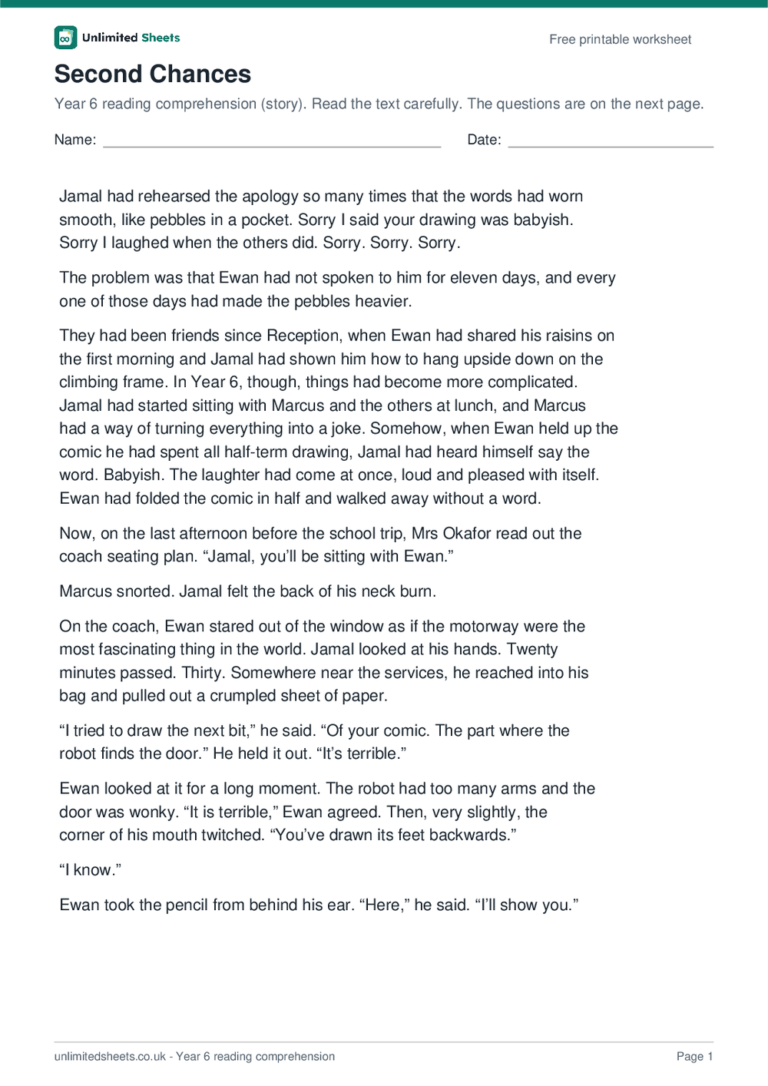
| Year 6 | Second Chances | Story | 330 | 7 |
| Year 6 | Should Primary School Children Have Smartphones? | Discussion | 240 | 7 |
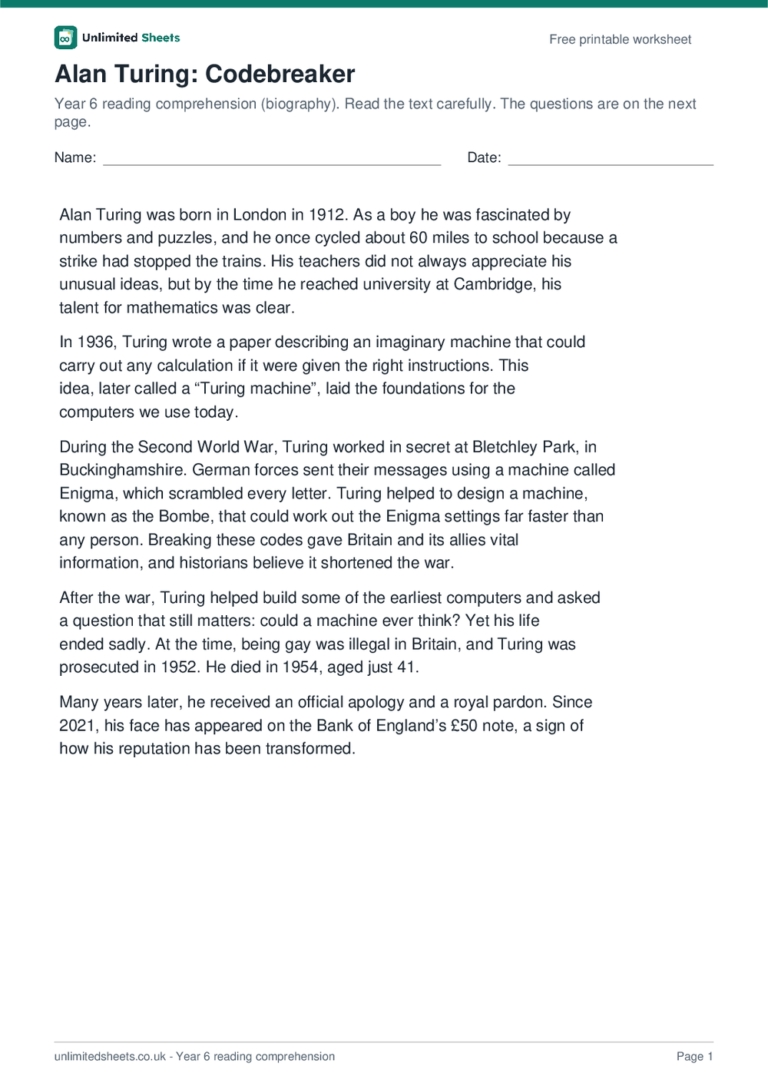
| Year 6 | Alan Turing: Codebreaker | Biography | 240 | 7 |
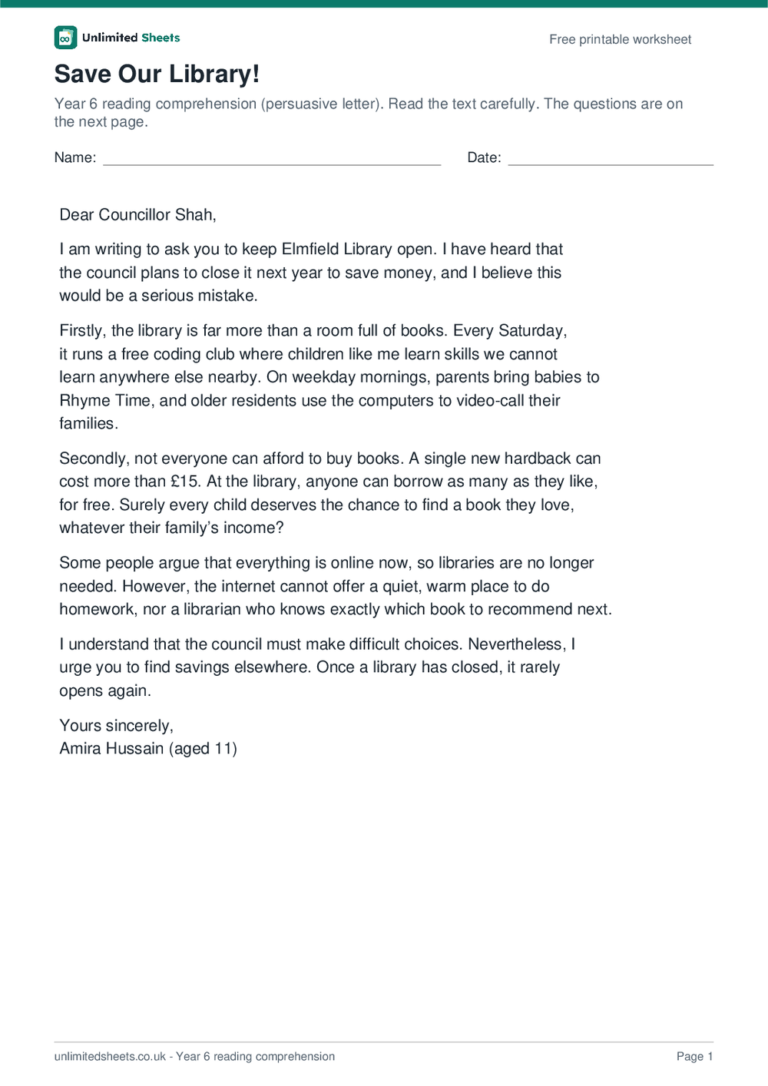
| Year 6 | Save Our Library! | Persuasive letter | 200 | 7 |
The reading skills behind the questions
Under each answer, the explanation names the skill the question practises. These match the reading skills that the Key Stage 1 and Key Stage 2 reading tests are built around.
- Retrieve: find a fact that the text states directly.
- Vocabulary: work out what a word or phrase means from the sentence around it.
- Infer: use clues to work out something the writer does not say, such as how a character feels.
- Predict: use what has happened so far to say what is likely to happen next.
- Sequence and summarise: put events in order and sum up the main idea.
- Language: explain why a writer chose a word, simile or punctuation mark.
- Structure: explain how a text is organised, from numbered steps to “on the other hand”.
How to help your child with comprehension
- Read the text twice. The first time for the story or the main idea, the second time with the questions in mind.
- Ask “How do you know?” Every answer should point back to words in the text. That habit matters more than getting each answer right.
- Talk about the wrong answers. In these questions the wrong options are tempting for a reason, such as a detail from the wrong part of the text.
- Stop at unfamiliar words. Read the sentence again and guess the meaning before reaching for a dictionary.
- Keep reading for pleasure. Comprehension grows fastest when children read lots of books they enjoy and talk about them.
Reading comprehension in the national curriculum
- Years 1 and 2: listen to and discuss stories, poems and non-fiction; check that the text makes sense; predict what might happen; answer questions and make simple inferences.
- Years 3 and 4: read a wider range of texts; use a dictionary for meanings; infer feelings and motives; identify main ideas; find and record information from non-fiction.
- Years 5 and 6: read fiction, poetry, plays and non-fiction from different times; summarise main ideas; explain how language and structure create meaning; tell fact from opinion; provide reasoned justifications for their views.
Common mistakes
- Answering from memory instead of looking back at the text.
- Choosing an answer that is true but does not answer the question, such as a real detail from the wrong paragraph.
- Taking figurative language literally: the hill did not really tip, and the sea was not really holding its breath.
- Ignoring small words such as NOT, first or most in the question.
Printable reading comprehension worksheets
Every text has a printable version, with the text on page 1, tick-box questions next and an answer key that gives the evidence for each answer.









Year 6: Should Primary School Children Have Smartphones?
Year 6 · Text, questions + answer key
Download PDF- Year 1: Busy Bees (Year 1). An original information of about 70 words with 6 questions on retrieval, vocabulary and inference. The key explains every answer.
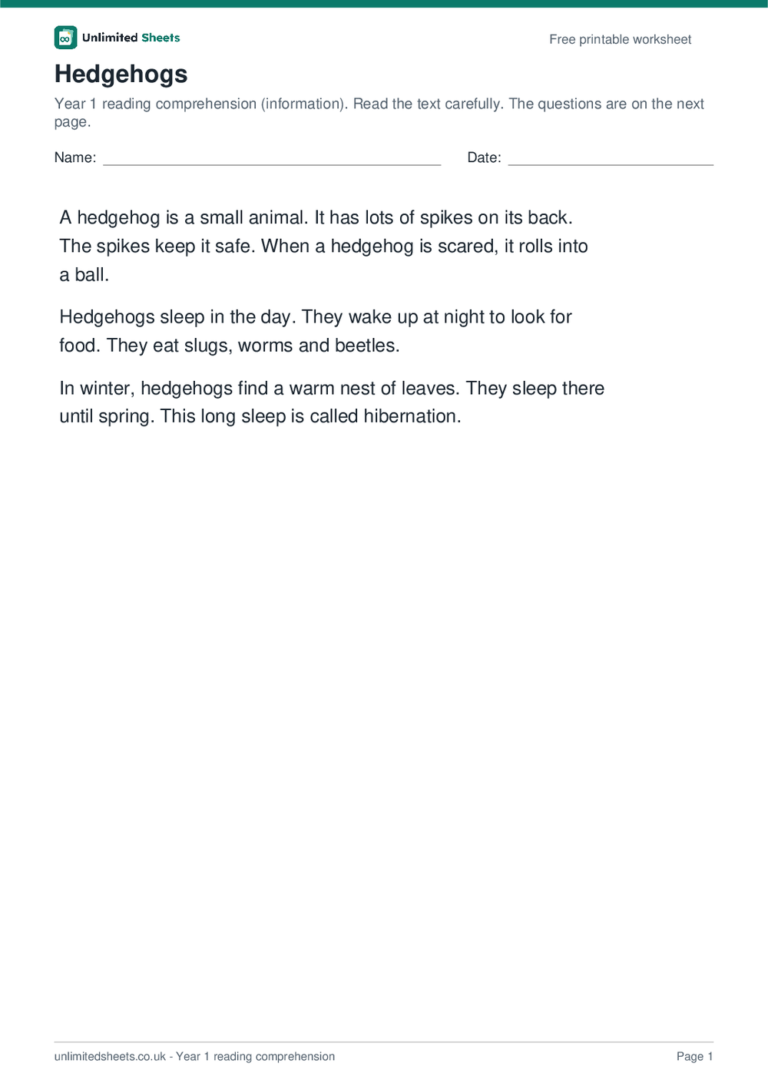
- Year 1: Hedgehogs (Year 1). An original information of about 70 words with 6 questions on retrieval, vocabulary and inference. The key explains every answer.
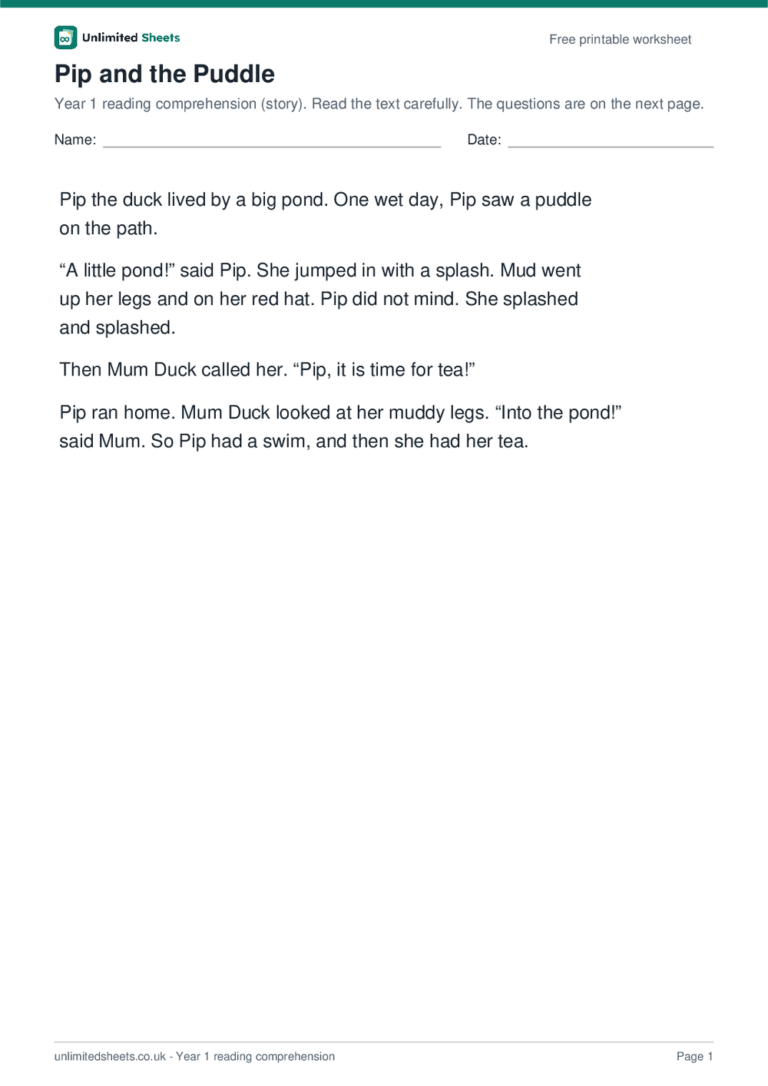
- Year 1: Pip and the Puddle (Year 1). An original story of about 80 words with 6 questions on retrieval, vocabulary and inference. The key explains every answer.
- Year 1: Sam and the Kite (Year 1). An original story of about 80 words with 6 questions on retrieval, vocabulary and inference. The key explains every answer.
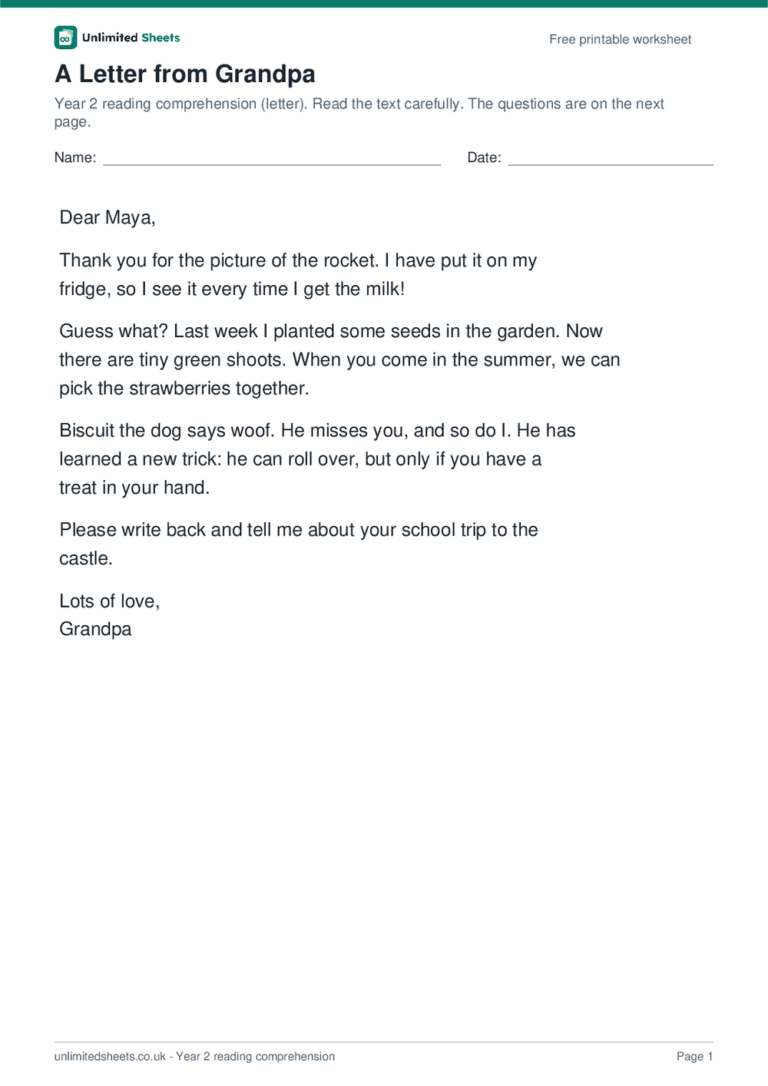
- Year 2: A Letter from Grandpa (Year 2). An original letter of about 110 words with 7 questions on retrieval, vocabulary and inference. The key explains every answer.
- Year 2: Emperor Penguins (Year 2). An original information of about 110 words with 7 questions on retrieval, vocabulary and inference. The key explains every answer.
- Year 2: How to Grow a Cress Egg Head (Year 2). An original instructions of about 110 words with 6 questions on retrieval, vocabulary and inference. The key explains every answer.
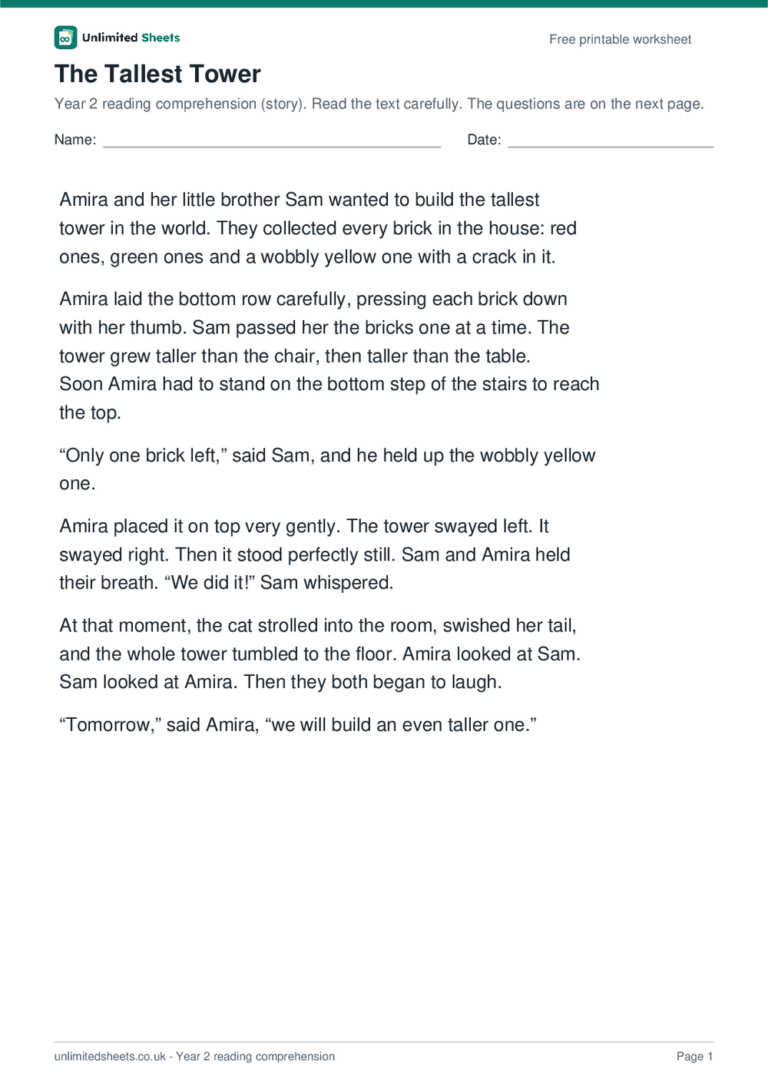
- Year 2: The Tallest Tower (Year 2). An original story of about 170 words with 6 questions on retrieval, vocabulary and inference. The key explains every answer.
- Year 3: The Fox at Night (Year 3). An original poem of about 80 words with 7 questions on retrieval, vocabulary and inference. The key explains every answer.
- Year 3: The Great Fire of London (Year 3). An original information of about 220 words with 7 questions on retrieval, vocabulary and inference. The key explains every answer.
- Year 3: The Note in the Library Book (Year 3). An original story of about 210 words with 7 questions on retrieval, vocabulary and inference. The key explains every answer.
- Year 3: Volcanoes (Year 3). An original information of about 180 words with 7 questions on retrieval, vocabulary and inference. The key explains every answer.
- Year 4: The Key Under the Mat (Year 4). An original story of about 200 words with 7 questions on retrieval, vocabulary and inference. The key explains every answer.
- Year 4: The Night Train (Year 4). An original poem of about 130 words with 7 questions on retrieval, vocabulary and inference. The key explains every answer.
- Year 4: The Romans in Britain (Year 4). An original information of about 180 words with 7 questions on retrieval, vocabulary and inference. The key explains every answer.
- Year 4: The Water Cycle (Year 4). An original explanation of about 220 words with 7 questions on retrieval, vocabulary and inference. The key explains every answer.
- Year 5: Mary Anning: The Fossil Hunter (Year 5). An original biography of about 270 words with 7 questions on retrieval, vocabulary and inference. The key explains every answer.
- Year 5: Storm Warning (Year 5). An original story of about 300 words with 7 questions on retrieval, vocabulary and inference. The key explains every answer.
- Year 5: The Missing Map (Year 5). An original playscript of about 170 words with 7 questions on retrieval, vocabulary and inference. The key explains every answer.
- Year 5: Village Pond Rescue (Year 5). An original newspaper report of about 200 words with 7 questions on retrieval, vocabulary and inference. The key explains every answer.
- Year 6: Alan Turing: Codebreaker (Year 6). An original biography of about 240 words with 7 questions on retrieval, vocabulary and inference. The key explains every answer.
- Year 6: Save Our Library! (Year 6). An original persuasive letter of about 200 words with 7 questions on retrieval, vocabulary and inference. The key explains every answer.
- Year 6: Second Chances (Year 6). An original story of about 330 words with 7 questions on retrieval, vocabulary and inference. The key explains every answer.
- Year 6: Should Primary School Children Have Smartphones? (Year 6). An original discussion of about 240 words with 7 questions on retrieval, vocabulary and inference. The key explains every answer.
Reading comprehension questions
What is reading comprehension?
It is understanding what you read. That includes finding information, knowing what words mean, working out what is suggested but not said, and explaining why the writer made certain choices.
How long should a Year 3 comprehension text be?
The Year 3 texts here are about 200 words. Years 1 and 2 are shorter, and the Year 5 and 6 texts are around 300 to 400 words, so children can finish a text and its questions in one sitting.
What does inference mean?
Inference is working something out from clues in the text. If a character’s eyes are shining after she calls something a joke, you can infer that she is excited even though the text does not say so.
Are the texts and questions original?
Yes. Every text and question on this page was written for Unlimited Sheets. The information texts were checked against reliable historical and scientific sources.
Practice for each year group
Each page below has only the practice, curriculum objectives and worksheets for that year.
- Year 1 reading comprehension
- Year 2 reading comprehension
- Year 3 reading comprehension
- Year 4 reading comprehension
- Year 5 reading comprehension
- Year 6 reading comprehension
Keep practising
Updated 23 November 2026.